
Top Signs You Need Garage Door Service – Don’t Ignore These
A garage door that needs two button presses to close isn’t being finicky. The safety sensor alignment is drifting, and that drift doesn’t stop on its own. Most doors that fail badly in Lee-Harvard gave their owners a string of small warnings first: a new sound, a slower side, a gap in the spring coil. Those warnings are mechanical data, not quirks. If you’d rather not diagnose that yourself, call (844) 956-5742.
Why a Door That Moves Slower on One Side Is an Imbalance, Not a Slow Opener
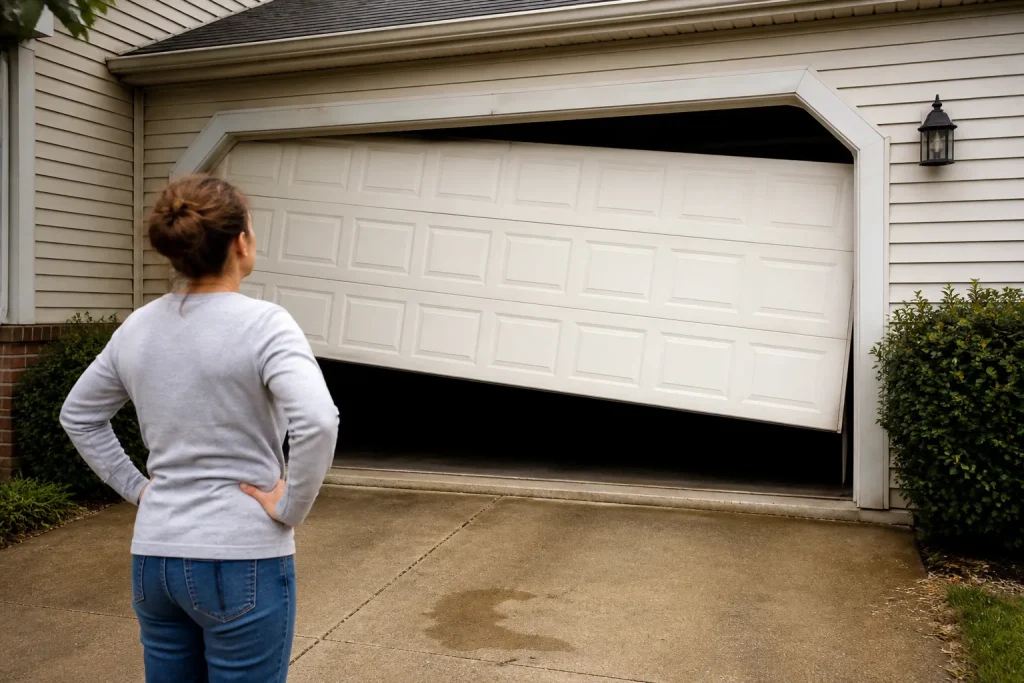
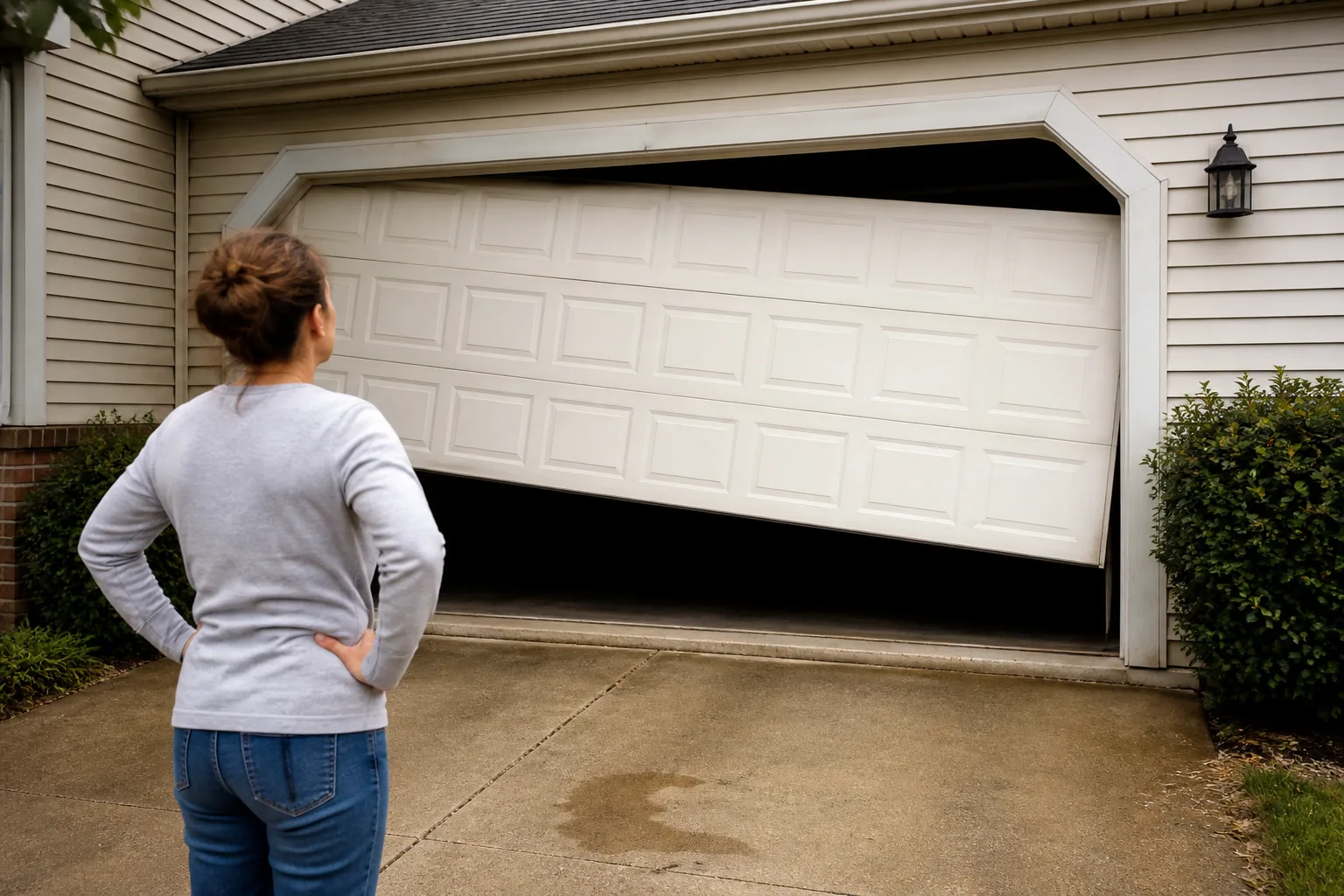
When one side of the door lags behind the other, the opener usually gets blamed. It’s rarely the opener. A door runs on two torsion springs (or two extension springs) and two cables, and those pairs are supposed to be matched. When one spring loses tension or a cable starts to fray, that side lifts heavier than the other, and the door tilts as it travels. The opener is just dragging the imbalance along.
Homeowners in Lee-Harvard often notice this as a door that looks crooked at the halfway point and straightens out near the top. It’s easy to wave off. It isn’t harmless. An unbalanced door puts constant off-axis load on the tracks and the opener’s gear assembly, which is how a small spring problem becomes a track replacement.
What to check in 60 seconds
- Open the door partway and look at the gap between the door panel and the floor at each edge. If one side sits higher, the lift is uneven.
- Watch the door travel. A tilt that appears mid-travel and corrects itself at full open points to spring or cable tension, not the opener.
- Listen. A healthy door makes one consistent sound. A door with one side fighting harder makes a different sound on the way up than on the way down.
Do not try to adjust or replace springs yourself. Torsion springs and the cables under tension are the genuinely dangerous part of this system, and a wound spring holds enough stored force to cause serious injury. That work belongs to a trained technician. An imbalance is caught cheaply with a balance check and gets expensive when the door runs crooked for months.
What the Grinding, Popping, or Scraping Sound Is Telling You
The exact sound narrows down the failing component faster than anything else you can report over the phone. In our experience, this is the single most useful detail a homeowner can share when calling. Here’s how the sounds map to parts:
Grinding
Grinding usually comes from a dry or worn torsion spring, a binding roller, or a screw-drive opener with a worn carriage. If it’s a LiftMaster or Chamberlain screw drive, the grinding is often internal to the rail. Belt and chain drive units from those same brands may instead give a rhythmic scrape at the top of the travel, which points at a roller or hinge.
Popping or a loud crack
A single sharp pop, sometimes followed by the door dropping an inch, means a torsion spring just broke. Stop using the door immediately and call for spring service. The door should not be operated on a broken spring, even once.
Scraping
Scraping against metal is a panel-to-track contact issue or a loose hinge. It’s usually the earliest and cheapest warning of the bunch, which makes it the easiest to ignore and the one most likely to cost you a panel if you wait.
Raynor and Clopay doors both have their own characteristic rattle and grind signatures, which is why brand familiarity matters. A technician who works on the same systems constantly hears the difference between a worn roller and a tired spring much faster than someone reading it fresh.
The 60-Second Visual Check That Reveals Your Actual Risk Level
You don’t need a ladder or tools to spot the warning signs that matter most. Stand in front of your closed door and run through these four checks. They map directly to how a technician decides whether a door is a quick fix or a safety issue.
- Spring coil gap. One clean, unbroken gap in the spring coil is normal. Two or more gaps, or a coil that looks stretched or separated, means the spring is close to the end of its life. That’s a scheduled replacement, not an emergency.
- Cable condition. Look at the cables running down each side of the door. Fraying, kinks, loose winding, or a cable resting slack against the panel means it’s failing. A snapped cable lets the door drop unevenly.
- Bottom seal. A gap under the bottom seal means the door isn’t closing flush. That’s often a track or balance problem showing up at the floor before you notice anything else.
- Panel alignment. Stand back and look at the panel lines across the door. Bowed or misaligned panels point to impact damage or track distortion.
A single frayed cable or a gap in the spring coil is a reason to book garage door repair before it becomes a spring failure or a dropped door. The visual check doesn’t replace a diagnosis, but it tells you whether to wait a week or pick up the phone today.
Why Intermittent Problems Are More Urgent Than Consistent Ones
A door that only sticks sometimes is generally more dangerous than one that sticks every single time. A consistent problem announces itself. An intermittent one hides a component that’s sitting right at the edge of failure, so you keep using the door normally while the risk builds.
The common examples in Lee-Harvard:
- A door that reverses on its own occasionally. That’s a sensor or limit switch at the end of its adjustment range. Next week it stops reversing, and next month it crushes something.
- A door that jams once a week then frees itself. Usually a roller or hinge on the verge of failure. When it finally lets go, it takes the track with it.
- An opener that occasionally sounds weak. That’s typically a worn gear or a failing capacitor. An opener that dies mid-travel leaves the door stuck and blocks your car.
- A door that reverses at inconsistent points. A partly failing safety sensor. It either opens when something is in the way, or it won’t close at all.
For intermittent failures, a positive diagnosis is worth more than a repair quote. A technician can check travel, sensor alignment, spring tension, and opener gear wear and tell you which component is on the edge. If you’re not sure whether your symptom is routine or urgent, call and describe it. We answer 24/7. Fast dispatch from 7am to 7pm, Sunday through Friday.
The Cost of Catching It Early vs. Waiting for Secondary Damage
A worn roller is a small repair. A worn roller that fails and derails the door off its track is a larger one. That gap between small and larger is where most of the real cost lives, and it’s almost always avoidable. The line item itself is minor. The cascade of damage is what adds up.
| What you catch early | What it becomes if you wait |
|---|---|
| Worn roller | Derailed door, bent track, damaged panel |
| Frayed cable | Snapped cable, dropped door, spring damage |
| Loose hinge | Panel scrape, opener strain, gear wear |
| Worn opener gear | Failed opener leaving the door stuck |
| Uneven track | Cable and spring imbalance, off-axis panel wear |
Handling a small item early during a routine visit is the cheapest outcome. Spring replacements are the exception worth flagging: a broken spring can’t be replaced alone in a pair. Matched springs are usually replaced together, so budget for a pair rather than a single. A trained tech can confirm the condition and quote the written estimate before any work begins. The written estimate is the price. No surprise invoice after the fact.
When to Call a Pro Instead of Living With It
Some signs are minor annoyances you can watch for a few weeks. Others are a hard stop. If you see any of these, stop operating the door and call:
- A broken spring (sharp pop plus a hanging door)
- A visible cable that’s frayed, kinked, or slack
- A door that jerks or tilts sharply mid-travel
- A door that reverses without a clear obstruction
- A door stuck open, leaving the house exposed
Those are the situations where an emergency door call is genuinely warranted. Garage doors are the only trade we work in, which means every technician carries the tools and parts for spring failures, opener faults, and track repair on a single call. We’re factory-familiar with the systems most often installed in Lee-Harvard homes, including LiftMaster and Craftsman openers, so the diagnosis starts with the brand rather than a scratchpad.
Related services in Lee-Harvard: garage door opener repair for a door that won’t respond to the remote; and garage door installation if a panel, track, or opener is showing age-related failure across the whole system.
The Bottom Line
The warning signs are never really subtle. They’re just easy to rationalize. A door that moves slower on one side is an imbalance. A new grinding sound is a part telling you it’s worn. A gap in the spring coil is a countdown clock. A door that fails intermittently is more urgent than one that fails every time. And catching a worn roller or a frayed cable today is always cheaper than repairing the track and opener damage those two items cause tomorrow. Pay attention, do the 60-second visual check once a month, and call when the door stops behaving like a door.
Our technicians have up to 14 years of experience across all five service lines: repair, Garage Door Repair Lee-Harvard, opener repair, spring service, and installation. If you’re in Lee-Harvard and need help, Garage Door Repair Lee-Harvard offers free estimates – call (844) 956-5742. We answer 24/7. Fast dispatch from 7am to 7pm, Sunday through Friday.
Frequently Asked Questions
A broken spring usually announces itself with a loud pop and a sagging or hanging door, and you should stop using the door immediately. A worn-but-intact spring is quieter: the door may still open, but slower on one side or with more strain than usual. A visible gap in the spring coil is a reliable sign of a worn spring that’s close to failing. Don’t test either one by hand; call (844) 956-5742 and get a trained diagnosis before something gives.
No. A broken spring leaves the door’s full weight held by the opener and the cables, and the door can drop unexpectedly. Even a single use can cause serious injury or damage the opener and track. Park outside and call for service. We answer 24/7. A call outside dispatch hours is booked into the next opening, Sunday through Friday, 7am to 7pm.
Yes. Intermittent failures are more urgent than consistent ones because they hide a component at the edge of failure while you keep using the door normally. A door that only reverses sometimes, or only jams occasionally, is one event away from a full failure. Book a visit and describe the symptom; a technician can pinpoint which part is on the edge. Call (844) 956-5742 for a free estimate.
The local pros we connect you with are licensed and insured as their state requires. Our team covers all five garage door services on a single call, and the work is quoted and agreed before anything starts. If the written estimate differs from the original quote, ask why before signing. Call (844) 956-5742 and we’ll talk it through.
Written by the team at Garage Door Repair Lee-Harvard.
Need Garage Door Help?
Call Garage Door Repair Lee-Harvard - the local pro we connect you with is licensed and insured, here with fast help in Lee-Harvard.
(844) 956-5742