
Last updated November 20, 2026
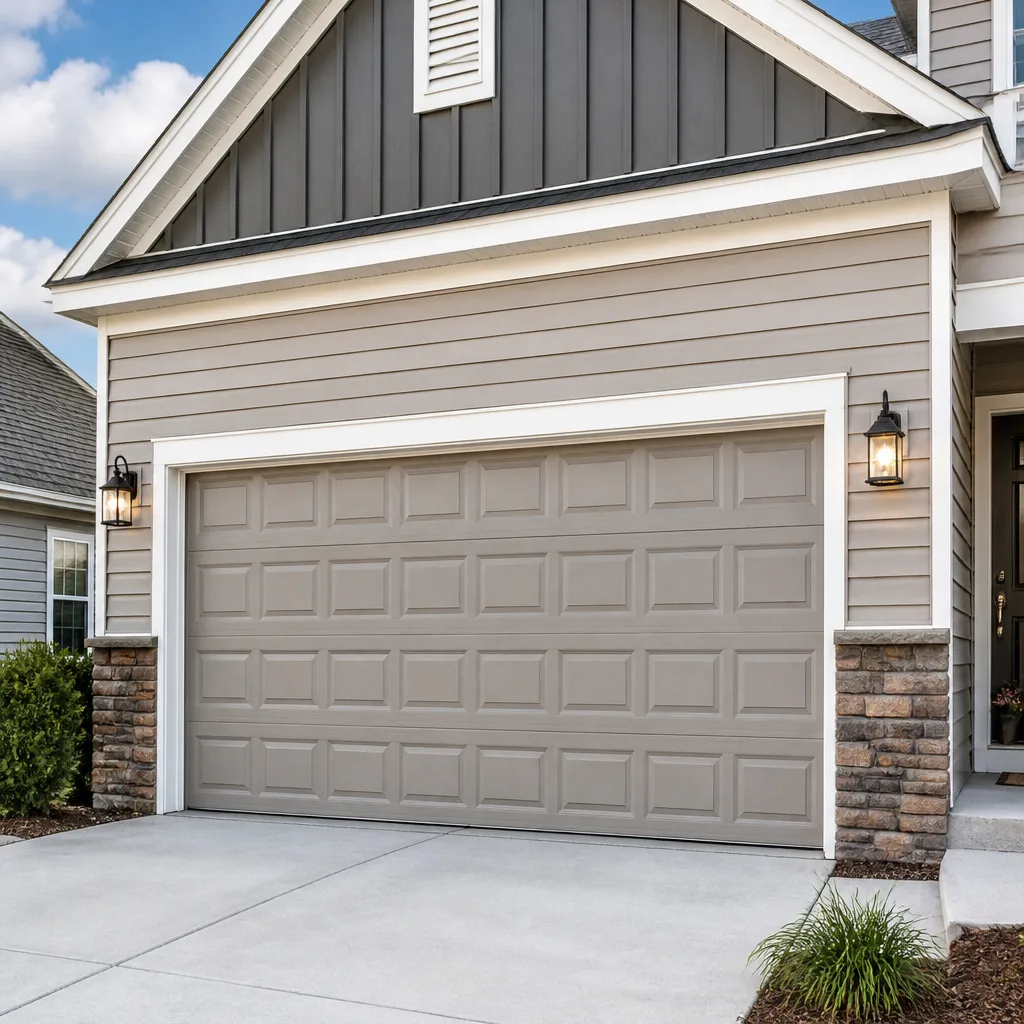 Raised-panel steel
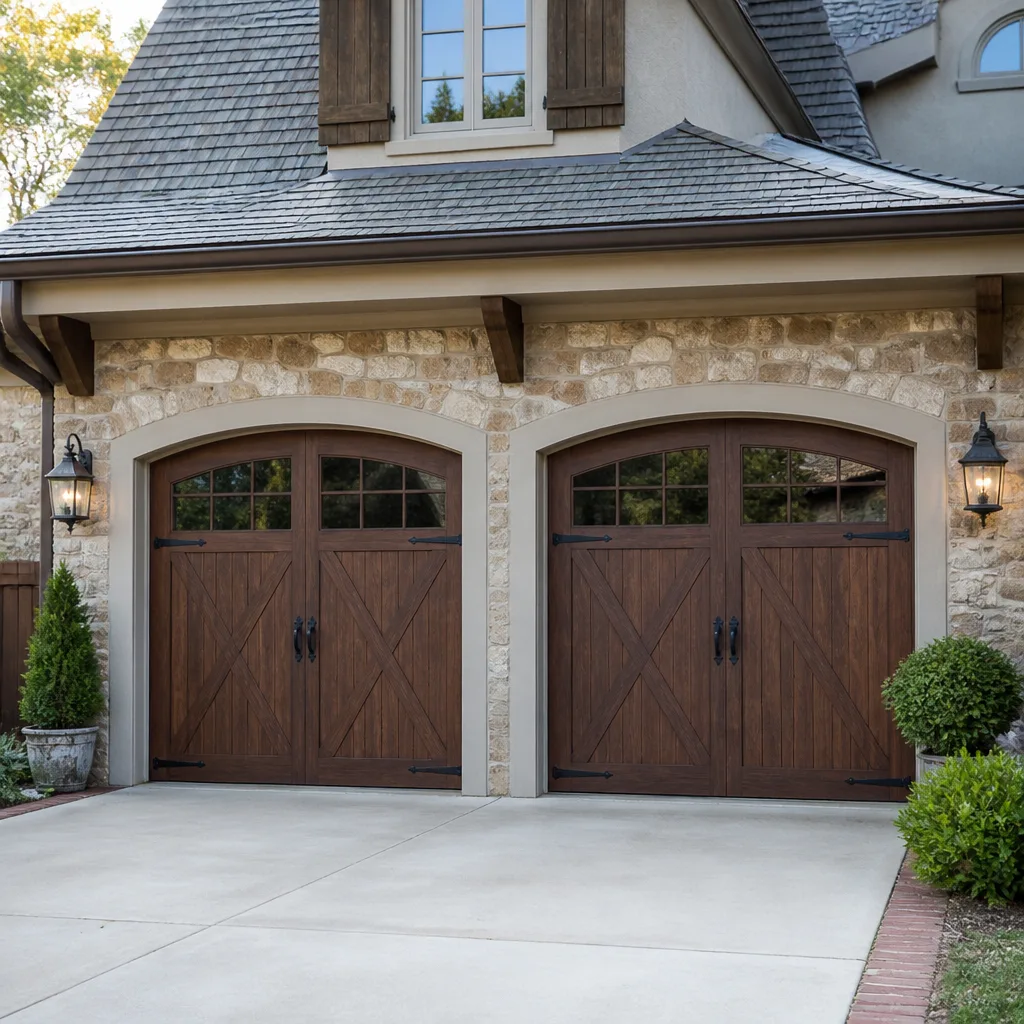 Carriage house
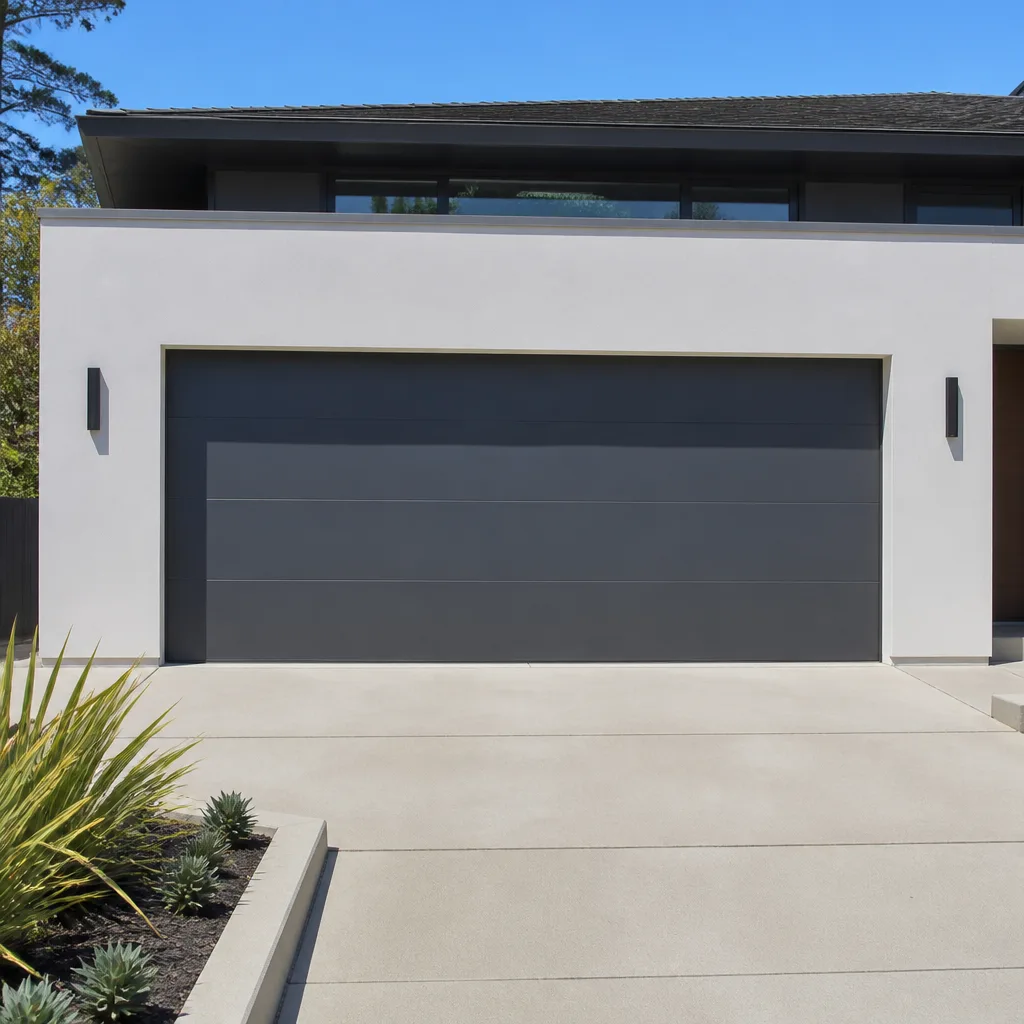 Modern flush
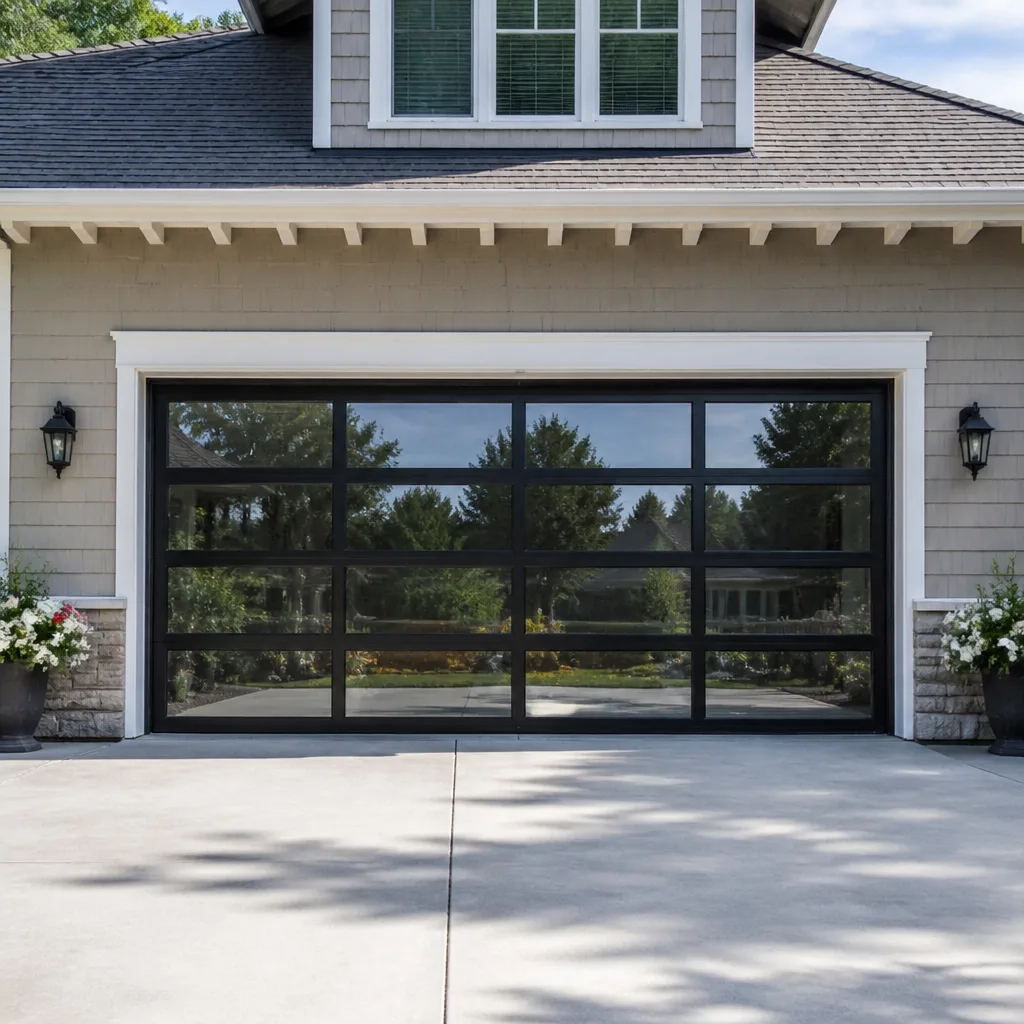 Full-view glass
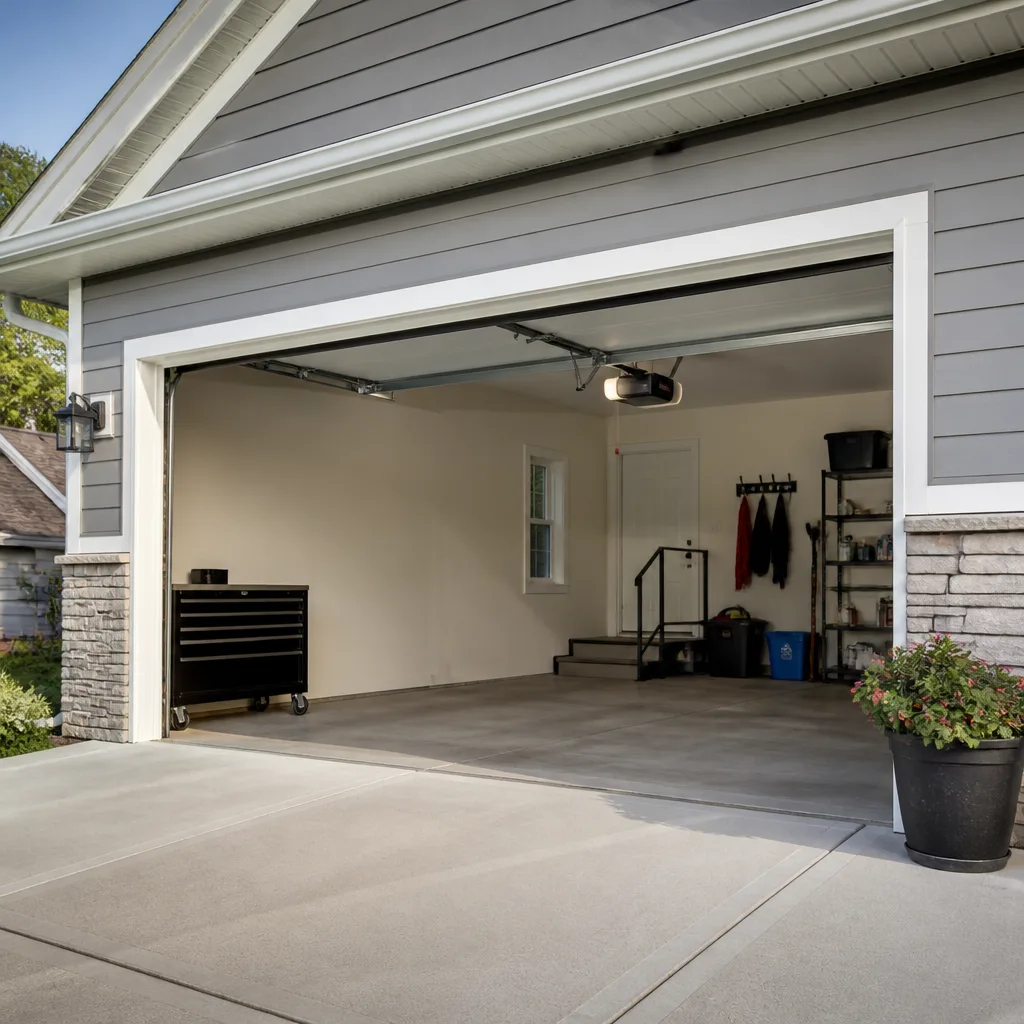 LiftMaster openers
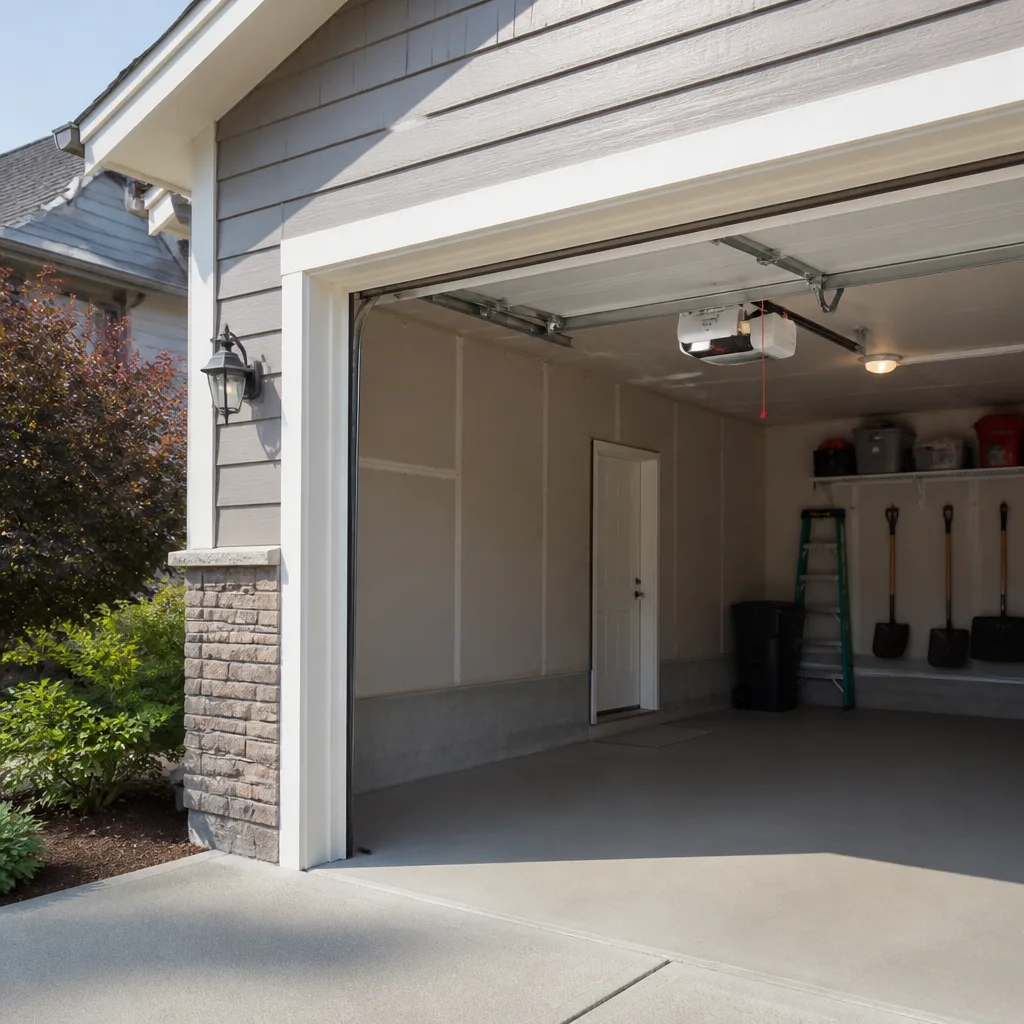 Chamberlain openers
Full 25-point door and opener safety check with every visit - springs, cables, rollers, tracks, and your LiftMaster or Chamberlain opener included
You get a price before we start. It does not change when the pro arrives.
Get your free estimateGarage Door Repair Maintenance Checklist for Lee-Harvard Homeowners
The number one cause of avoidable emergency garage door calls isn’t neglect. It’s a homeowner who inspects the door, notices something slightly off, decides it’s fine, and waits another six months. Most checklists make this worse because they tell you what to look at without telling you what “slightly off” actually means. A gap of a quarter inch on a spring, a cable that has a little slack, a track that’s a hair out of plumb: these are the details that separate a door that lasts from one that fails at the worst moment. This guide gives Lee-Harvard homeowners pass/fail criteria, real tolerances, and a clear line between what you can check yourself and what belongs in the hands of a technician.
Styles & brands we work with
- Raised-panel steel
- Carriage house
- Modern flush
- Full-view glass
- LiftMaster openers
- Chamberlain openers
Quick Answer
A garage door maintenance checklist works when it’s built around measurable checks: spring gap within 1/4 inch, cables with no visible slack or fraying, tracks plumb within 1/8 inch, and an opener that reverses under resistance. Homeowners in Lee-Harvard should handle visual inspection, lubrication, and balance testing, and hand off anything involving springs, cables, or the torsion assembly to a trained technician. Seasonal timing matters too, and the calendar here is driven by freeze-thaw cycles and heavy summer humidity rather than a generic spring-and-fall split.
Table of Contents
- Quick Answer
- Why a Checklist Beats a Guess
- Step 1: The Visual Inspection Pass/Fail Test
- Step 2: Spring and Cable Tolerances
- Step 3: Track Alignment and Door Balance
- Step 4: The Opener Force-Resistance Test
- Step 5: Lubrication Points That Actually Matter
- Step 6: Seasonal Timing for the Lee-Harvard Calendar
- What You Can Check vs. What Requires a Technician
- Common Mistakes to Avoid
- When to Call a Professional
- Frequently Asked Questions
- The Bottom Line
Why a Checklist Beats a Guess
A garage door is a system under constant tension: springs store energy, cables transfer it, the track guides it, and the opener carries the load of a door that can weigh hundreds of pounds. When one part drifts out of spec, the others compensate. That’s why a door that “still works” can be weeks away from a snapped spring or a cable off the drum. The failure doesn’t happen in isolation, and it doesn’t happen overnight.
What we’ve learned from years of service calls in Lee-Harvard is that the doors in the worst shape aren’t always the oldest ones. They’re the ones that got a visual once-over and a shrug. A homeowner sees a slightly sagging top section or hears a faint grinding sound and files it under “normal.” Six months later, the same door needs a full spring replacement and a track realignment instead of a lubrication pass. The checklist in this guide exists to catch those mid-stage problems before they compound.
We specialize exclusively in garage doors. That focus matters here because the judgment calls in maintenance – is that gap in spec, is that cable within tolerance, does that sound mean the bearing is dry or the spring is fatigued – are the kind of calls a generalist doesn’t make. We work with Genie, Clopay, Amarr, and Wayne Dalton systems regularly, and we know how each brand wears under the weather patterns this part of Ohio throws at it. Garage doors are all we do, and that focus shows in the work.
What this guide won’t do is tell you to grab a wrench and start adjusting springs. It’s a checklist, not a DIY manual for the dangerous parts. Read it as a map: here’s what to look at, here’s the number that tells you it’s fine or not fine, and here’s where you stop and call someone.
Step 1: The Visual Inspection Pass/Fail Test
Start with the door closed and the opener disconnected. Walk the full width of the door and look at these specific things. Each check has a pass and a fail, so you’re not guessing.
- Panel condition: Pass if panels are flat with no cracks, dents, or separation at the seams. Fail if any panel is cracked, if two sections have separated, or if you can see daylight through a seam. Clopay and Amarr doors hold up well in this climate, but panel damage is a structural issue, not a cosmetic one.
- Hinges and rollers: Pass if hinges are tight and rollers spin freely by hand. Fail if a hinge is loose enough to wiggle, or a roller is flat-spotted or wobbles in its bracket.
- Weather seal at the bottom: Pass if the bottom seal contacts the floor evenly across the full width. Fail if you can see light or feel a draft under any part of it. In Lee-Harvard’s winters, a failed seal lets in cold air and moisture that freezes and stresses the door frame.
- Hardware fasteners: Pass if bolts and lag screws are snug. Fail if you find a loose bracket, a missing bolt, or a hinge pulling away from the panel.
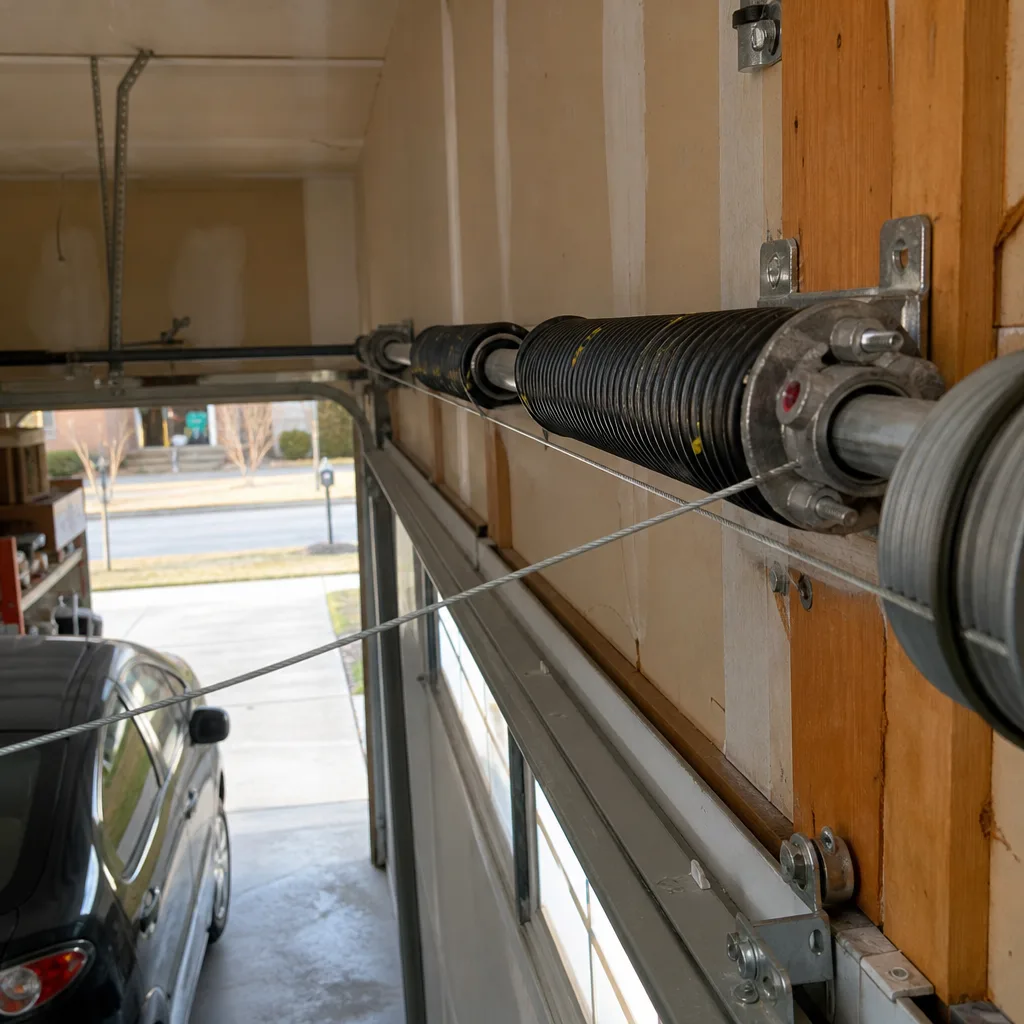
- Spring appearance: Pass if the coil is clean with no visible gap between coils when the door is closed. Fail if you see a gap wider than 1/4 inch between any two coils, or any rust that has eaten into the wire. Visually note it and move on. Do not touch, adjust, or attempt to tighten a spring.
- Cables: Pass if both cables run straight and taut along their path with no visible slack at the bottom bracket. Fail if either cable is frayed, kinked, has slack, or shows a broken strand. Cables are under extreme tension, and a failing one is a stop-now item.
If your inspection turns up a fail on the springs or cables, that’s a professional call. For everything else, keep walking the checklist. For issues that point to the door itself rather than the opener, garage door repair covers the diagnosis and fix in one visit.
Step 2: Spring and Cable Tolerances
This is the section that separates a useful checklist from a useless one. Springs and cables are the two components most likely to fail catastrophically, and they’re also the two where homeowners get the least specific guidance. Here are the tolerances that matter.
Spring gap
With the door fully closed, look at each coil in the torsion spring above the door. The gap between adjacent coils should be no more than 1/4 inch. A wider gap means the spring has stretched beyond its design spec and is carrying uneven load across its length. That uneven load accelerates fatigue and is the leading precursor to a snap. If you see a 3/8-inch gap or larger on any single coil, plan for a spring replacement rather than waiting. A spring price covers one spring, and pairs are usually replaced together, so plan accordingly.
Cable tension and condition
Cables should be taut with no visible slack at the bottom bracket, and the winding on the drum should be even with no overlap. Run your eyes – not your hands – along each cable. A pass means straight, evenly wound, and no broken strands. A fail means any of the following:
- Visible slack in the cable at rest
- Frayed or kinked cable anywhere along its length
- Cable wound unevenly on the drum, or riding off the edge
- A broken strand poking out from the braid
Cables are under the same tension as the springs they work with. A cable that’s fraying can snap without warning, and when it does, the door drops. We’ve seen what a failed cable does to a door, and it’s not a repair to put off. Spring repair is its own specialty, and this is exactly the kind of safety-critical job that calls for a trained technician rather than a homeowner with a ladder. If your inspection flags a spring or cable, the right move is to stop the check and get eyes on it. We perform garage door spring repair as a standalone service because it demands the right tools and the right training, and it’s not a job to improvise.
Step 3: Track Alignment and Door Balance
A door that runs smoothly on well-aligned tracks is quieter, lasts longer, and puts less strain on the opener motor. Two checks tell you whether the tracks are in spec.
Plumb and level test
Hold a level against the vertical track on each side. The track should be plumb within 1/8 inch over its full height. A door that’s out of plumb by more than that will bind on one side, and the opener will fight the bind every cycle. Check the horizontal track for level in the same way. Anything that’s visibly out of line, or that changes when you gently push on the door, needs realignment.
Balance test
- Close the door and disconnect the opener using the release cord.
- Lift the door by hand to about halfway open.
- Let go. A balanced door stays where you put it, or drifts only slightly.
- If the door drops on its own, the springs are under-tensioned or fatigued. If it rises on its own, they’re over-tensioned.
A door that fails the balance test is telling you the springs are no longer matched to the door’s weight. That’s a spring issue, not a track issue, and it needs a technician. The balance test itself is safe. Adjusting the springs to fix it is not. In Lee-Harvard, the freeze-thaw cycle through winter and early spring works the door hardware hard, and tracks that were aligned in October can shift by March. Check the level again after the first hard freeze and again when the ground thaws.
Step 4: The Opener Force-Resistance Test
Your opener has a force setting that tells the motor how much resistance to push through before it reverses. If that setting drifts, the opener either strains against a binding door or fails to reverse when something is in the way. The force-resistance test tells you which.
- Close the door and reconnect the opener. Run it through a full open and close cycle and listen. A healthy cycle is steady and relatively quiet.
- Stand outside the door’s path and watch the close cycle. The door should move smoothly with no hesitation, jerking, or speed changes.
- Test the reversal. Place a solid object about the height of a roll of paper towels under the closing door. The door should reverse on contact. If it presses down and keeps going, the force setting is too high and needs adjustment.
- Test the photo-eye safety reversal. With the door open, wave your foot or a broom through the photo-eye beam while the door is closing. It should reverse immediately. If it doesn’t, the safety system has failed and needs attention before the door is used again.
What the result tells you about motor health: an opener that hesitates, jerks, or strains during the cycle is working harder than it should. That strain can come from a binding track, worn rollers, or a motor that’s reaching the end of its service life. We work with LiftMaster, Chamberlain, Genie, and Craftsman systems, and each has its own force-setting procedure and its own telltale sounds when the motor is struggling. If the opener is the issue, garage door opener repair is the service that addresses it directly.
Step 5: Lubrication Points That Actually Matter
Lubrication is the easiest maintenance task and the one most commonly done wrong. The goal is to reduce friction on moving parts without attracting dirt or damaging the components. Here’s what to lubricate and what to leave alone.
Lubricate these
- Rollers: A few drops of garage door lubricant on the roller bearings and stems. Not the track itself.
- Hinges: A light spray at the pivot points of each hinge.
- Springs: A light coating of garage door lubricant on the spring coils reduces friction between coils. This is a spray-and-go job, not a wipe-and-adjust job.
- Bearings and center bracket: A drop on the bearing at the center bracket where the torsion shaft passes through.
Avoid these
- WD-40 on springs or any moving part: This is the most common mistake we see. WD-40 is a solvent and displaces lubricant rather than providing it. It leaves the spring drier than it started and attracts dust that accelerates wear. Use a product made for garage doors, not a general-purpose spray.
- Grease on the tracks: The tracks should be clean and dry. Grease collects dirt and grit, which turns the track into a grinding paste. Wipe tracks clean with a dry cloth.
- Oil-based products on nylon rollers: Nylon rollers don’t need lubricant and can be damaged by petroleum-based sprays. Check what kind of rollers you have before spraying.
Lubricate every three months as a baseline. In Lee-Harvard, add a pass in late fall before the first freeze and again in early spring after the thaw, when humidity and temperature swings work the hardware hardest. A five-minute lubrication pass is the cheapest maintenance you’ll ever do on a door.
Step 6: Seasonal Timing for the Lee-Harvard Calendar
Every generic garage door checklist tells you to do maintenance in spring and fall. That’s fine as a starting point, but it doesn’t account for what the weather in this part of Ohio actually does to a door. Here’s the calendar that matches how doors in Lee-Harvard actually age.
Late fall (before the first hard freeze)
This is the most important maintenance window of the year. Cold contracts metal, and a door that was in spec in September can bind in December. Lubricate all moving parts, check the bottom seal for gaps that will let cold air in, and inspect the springs while the door is closed. A door that fails in January is a much worse problem than a door that gets adjusted in November.
Mid-winter (after the first hard freeze)
Freeze-thaw cycles shift the ground and the door frame. Re-check track plumb and level. Listen for new sounds on the first cold cycle of the morning. If the door groans or hesitates, note it and address it before it becomes a binding problem.
Early spring (when the ground thaws)
This is the second big maintenance window. The thaw reverses the contraction and can leave tracks out of alignment and springs under different tension. Run the full visual inspection and balance test again. This is also the time to check for moisture damage around the bottom seal and frame.
Late summer (before humidity peaks then breaks)
Ohio humidity can swell wooden door components and stiffen seals. Check hinges for tightness and rollers for free movement. This pass catches the wear that summer humidity accelerates, and it sets the door up for the fall freeze. A four-season schedule is more work than two visits a year, but it’s the schedule that matches how a Lee-Harvard door actually ages.
What You Can Check vs. What Requires a Technician
The line is clear, and it’s drawn by safety. Here’s the split.
Homeowner-safe tasks
- Visual inspection of panels, hinges, rollers, weather seal, and fasteners
- Lubrication of rollers, hinges, springs, and bearings with the right product
- Balance test with the opener disconnected
- Force-resistance and photo-eye reversal tests
- Wiping tracks clean with a dry cloth
- Replacing the bottom weather seal on a standard door
Technician-only tasks
- Any adjustment, replacement, or removal of torsion springs
- Any work on cables, drums, or the winding assembly
- Track realignment that requires loosening brackets
- Replacing a broken spring, whether one or a matched pair
- Adjusting tension on a door that fails the balance test
- Any work on a door that won’t open or won’t close and has a spring or cable issue
The reason for the split is physics. A torsion spring under load stores enough energy to cause serious injury if it releases unexpectedly, and the tools and procedures to handle it safely aren’t things a homeowner has on hand. The same is true for cables and drums. A real inspection flags danger, and the safe move is to stop at the line and call a professional. If your checklist turns up a spring or cable problem, don’t wait for a convenient time. When your door won’t open or won’t close, emergency service is available, and the right call is the one that gets a trained technician to look at it. For a full new door or a major component replacement beyond repair, garage door installation covers the measure, order, and install process. The measure and quote are scheduled, not same-day, because the work is ordered and built to fit.
Common Mistakes to Avoid
- Spraying WD-40 on the springs. It’s the single most common lubrication mistake we see, and it leaves the spring drier and more dust-attracting than before. Use a garage-door-specific lubricant, and don’t substitute a general household spray.
- Treating a small spring gap as normal. A 1/4-inch gap between coils is the limit. A 3/8-inch gap is a fail, even if the door still opens. The door working doesn’t mean the spring is healthy.
- Adjusting the opener force setting when the real problem is the door. Turning up the force to push through a bind masks the symptom and overloads the motor. Fix the bind, then reset the force.
- Skipping the post-freeze track check. In Lee-Harvard, tracks that are plumb in October can be out of line by the first hard freeze in January. Check level again after the first cold snap, not just in the fall.
- Greasing the tracks. Tracks run better dry. Grease captures grit and turns the track into an abrasive paste that wears rollers faster.
- Ignoring a failed photo-eye reversal. If the door doesn’t reverse when the beam is broken, the safety system has failed. Stop using the door until it’s fixed; this is non-negotiable.
- Replacing one spring of a matched pair. When one spring of a pair fails, the other has lived the same number of cycles and carries the same fatigue. Replacing one leaves the door unbalanced and the second spring on borrowed time. Pairs are usually replaced together.
When to Call a Professional
Call a professional when your inspection turns up any of the following: a spring gap wider than 1/4 inch, a frayed or slack cable, a door that fails the balance test, an opener that strains or won’t reverse, a track that’s out of plumb by more than 1/8 inch, or any door that won’t open or close and has a spring or cable issue. Those are not maintenance items, they’re repairs, and the safety and mechanical expertise involved belongs in trained hands. If your door has never been serviced and fails more than one check, a full professional inspection is the right starting point. Garage Door Repair Lee-Harvard offers free estimates in Lee-Harvard. Call (844) 956-5742. We answer 24/7. Fast dispatch, 7am-7pm, Sunday through Friday. We’re closed Saturday.
Frequently Asked Questions
A garage door in Lee-Harvard should get a full homeowner maintenance pass four times a year, timed to the local weather calendar: late fall before the freeze, mid-winter after the first hard cold, early spring when the ground thaws, and late summer before humidity peaks. A professional inspection is worthwhile once a year, or more often if the door is heavily used. Call (844) 956-5742 to schedule a free estimate.
The spring gap check is the most important item. With the door closed, the gap between any two spring coils should be no more than 1/4 inch. A wider gap means the spring is fatigued and vulnerable to snapping. Since springs are under extreme tension, this is a visual check only. Don’t adjust or touch them. If you see a fail, call a technician.
Yes, you can apply a light coating of garage-door-specific lubricant to the spring coils as a maintenance step. What you should not do is adjust, tighten, or remove them. Lubrication is safe; anything involving the spring’s tension is not. Never use WD-40 on springs, because it displaces lubricant and attracts dust. Call (844) 956-5742 for an exact quote on any spring service, and estimates are free.
A door that reverses or stops partway down is usually responding to one of three things: a photo-eye safety system that’s been blocked or misaligned, a force setting that’s too low, or a binding track that’s causing resistance the opener interprets as an obstacle. In Lee-Harvard, freeze-thaw cycles frequently shift the tracks enough to trigger this. Test the photo-eye by waving an object through the beam while the door closes. If the issue continues, it’s a repair call.
No. The price is quoted and agreed before any work starts, and the written estimate is the price. We don’t start a job on a verbal number and surprise you at the end. If the inspection turns up something the estimate didn’t cover, we tell you before we do the work. Call (844) 956-5742 for a free estimate.
The local professionals we connect you with are licensed and insured as required by their trade, and they specialize in garage door work. Our technicians have up to 14 years of experience with the major brands, including LiftMaster, Chamberlain, Genie, Clopay, Amarr, Wayne Dalton, Craftsman, and Raynor. Garage doors are all they do. Call (844) 956-5742 to discuss your door.
The Bottom Line
A maintenance checklist works when it gives you numbers, not adjectives. Check your spring gap against the 1/4-inch limit, your track against 1/8-inch plumb, and your opener against a real force-resistance test. Lubricate with the right product, not a general household spray, and never grease the tracks. Time the checks to the Lee-Harvard weather calendar rather than a generic spring-and-fall schedule. Know where the line is: anything involving springs, cables, or drum work is a technician’s job, not a homeowner’s. Do that, and you’ll spend less on repairs and deal with fewer emergency calls.
For garage door repair, opener service, spring work, or a new installation in Lee-Harvard, call (844) 956-5742. We answer 24/7. Fast dispatch, 7am-7pm, Sunday through Friday. We’re closed Saturday. Estimates are free, the price is agreed before any work starts, and the written estimate is the price. From a snapped spring to a full new installation, one call covers it. Visit Garage Door Repair Lee-Harvard for the full service overview.
Written by the team at Garage Door Repair Lee-Harvard.
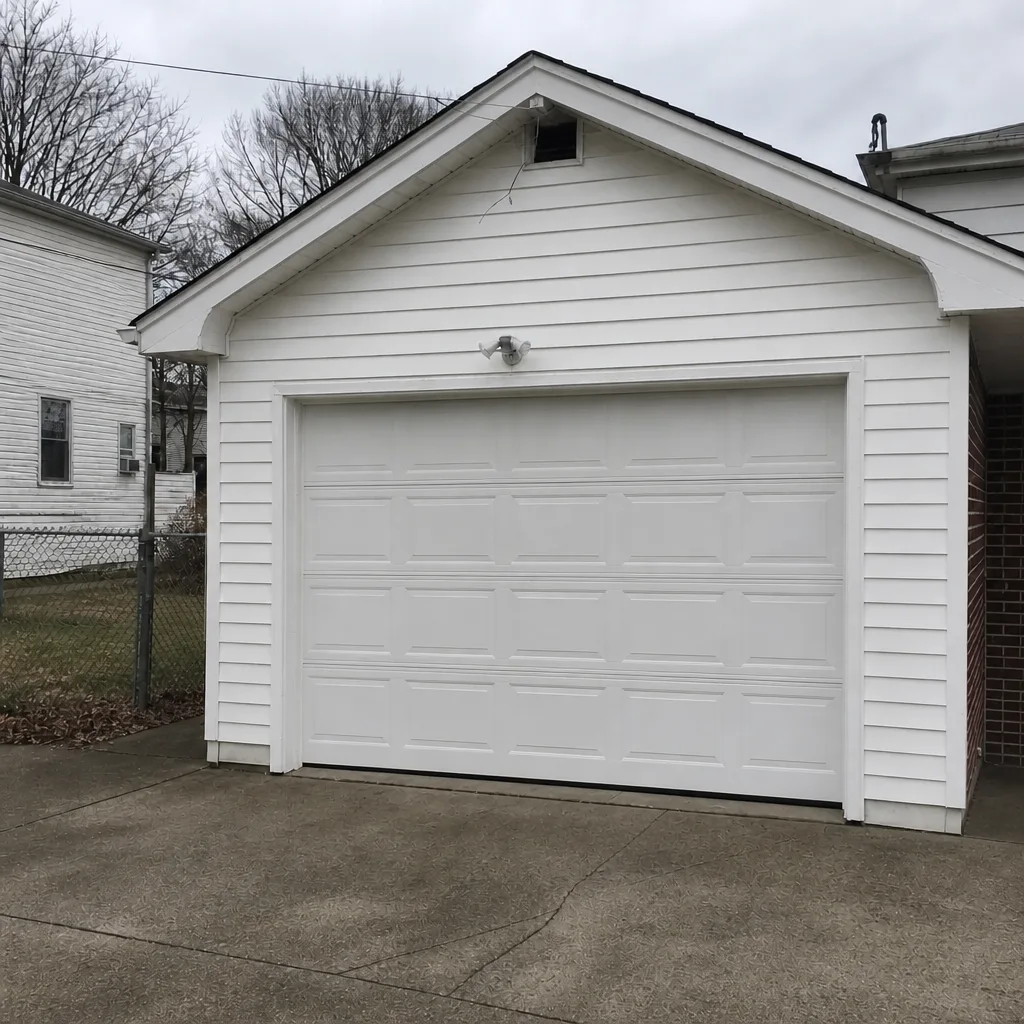
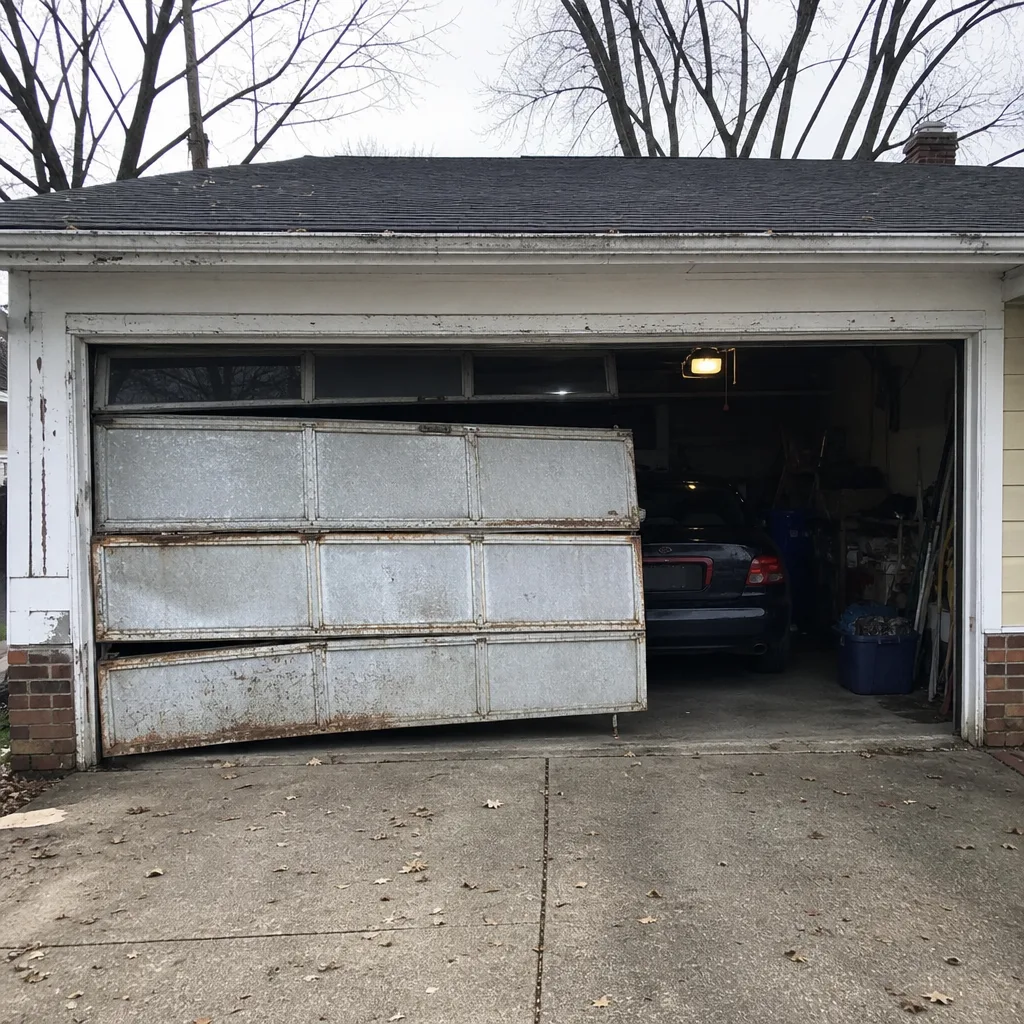
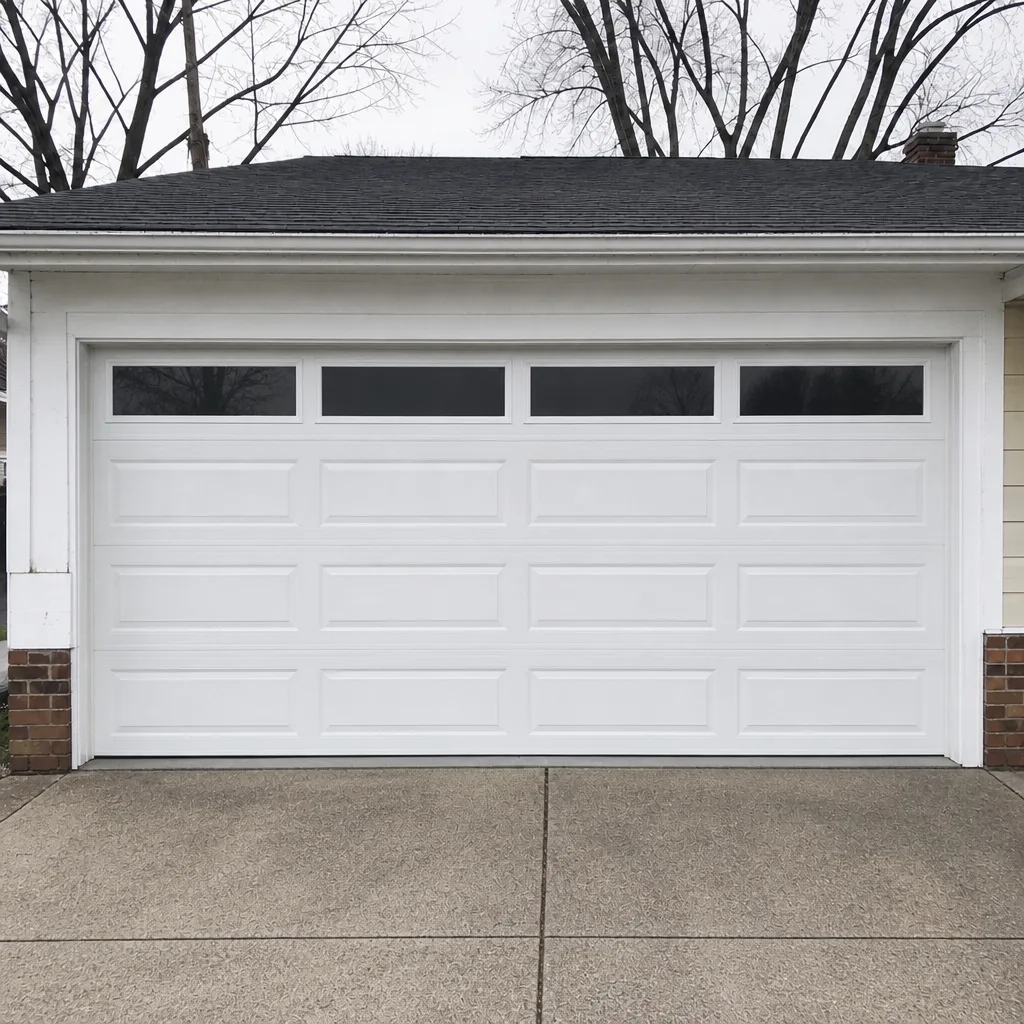
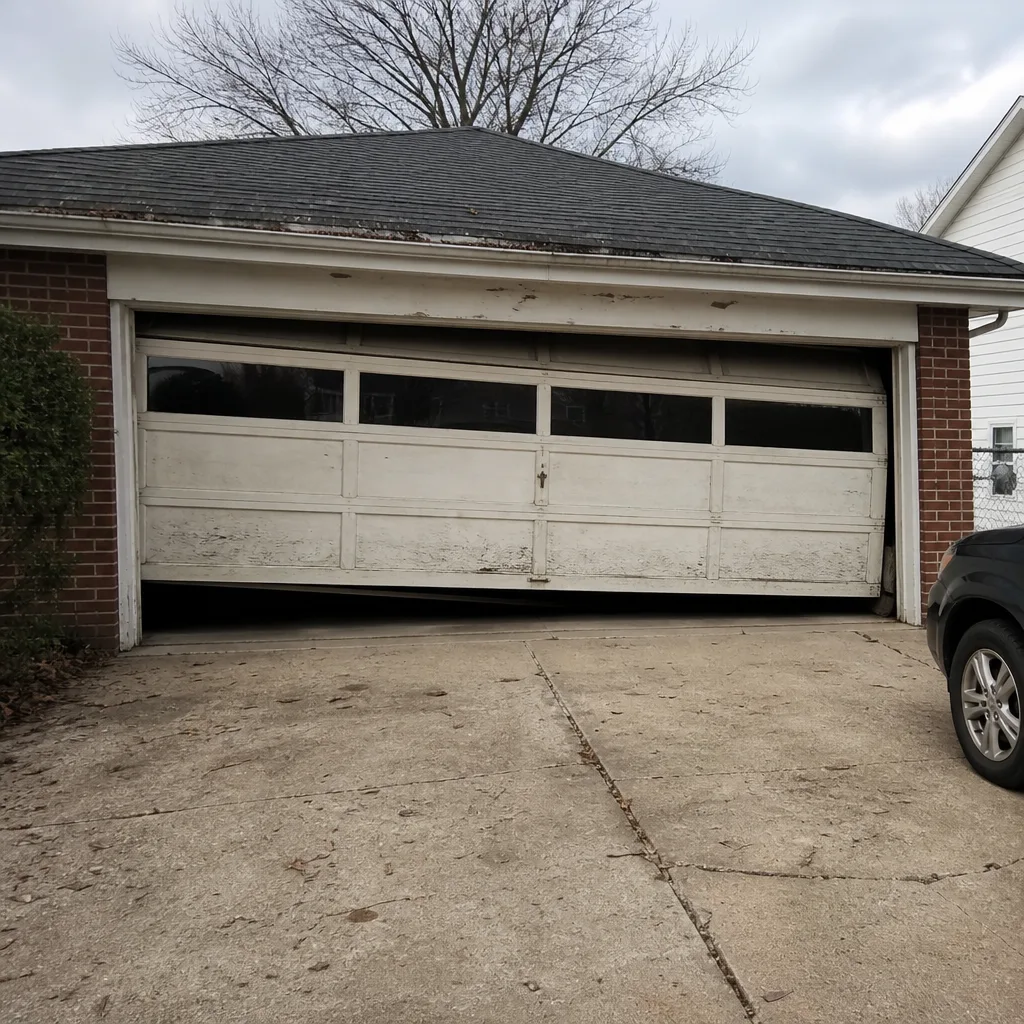
See the difference
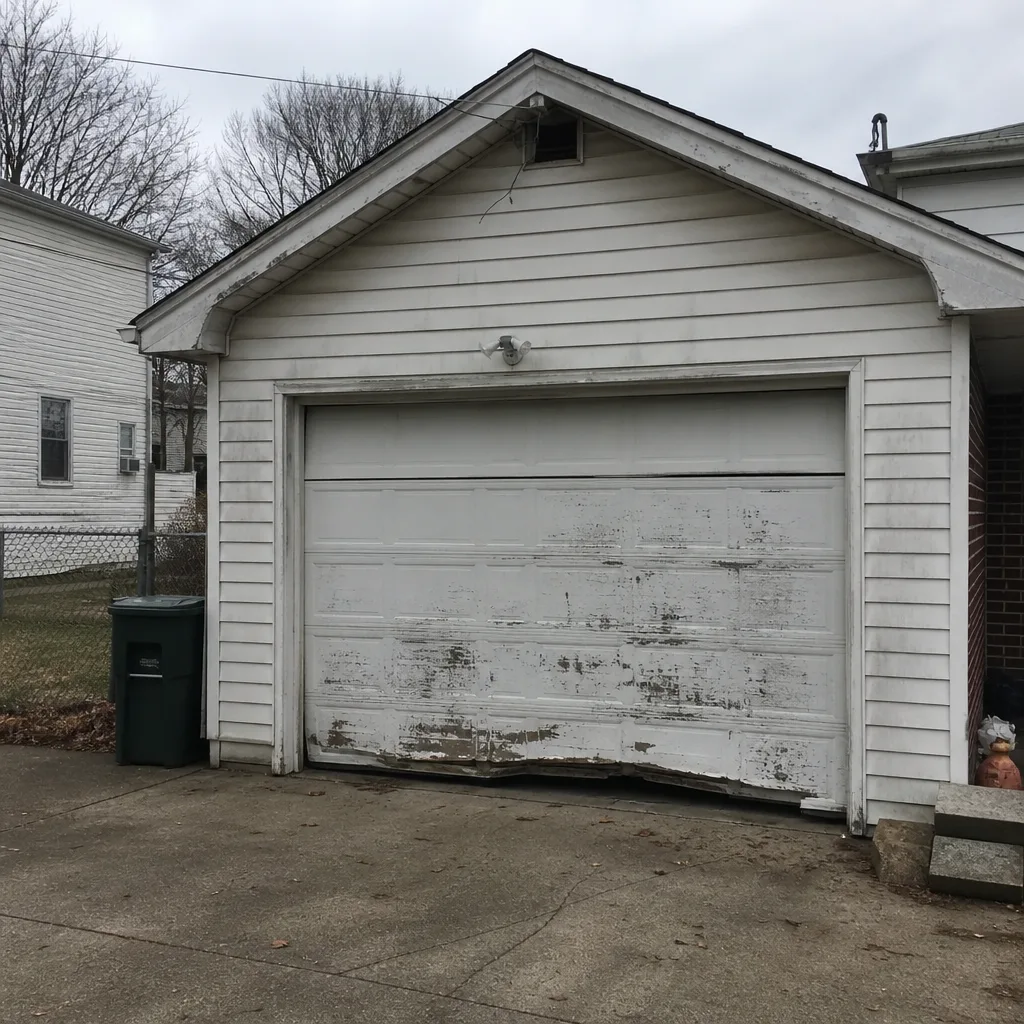 Before
 After
 Before
 After
 Before
 After