
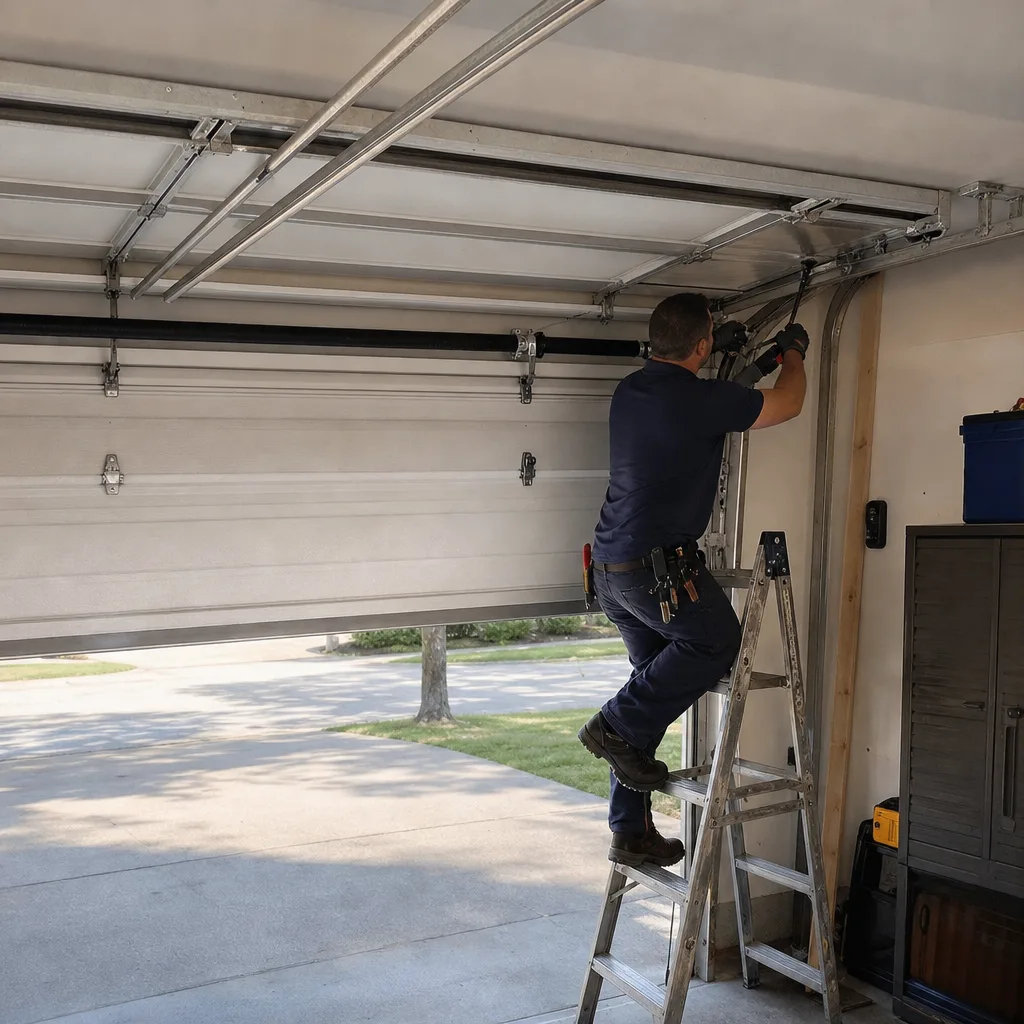
Last updated November 20, 2026
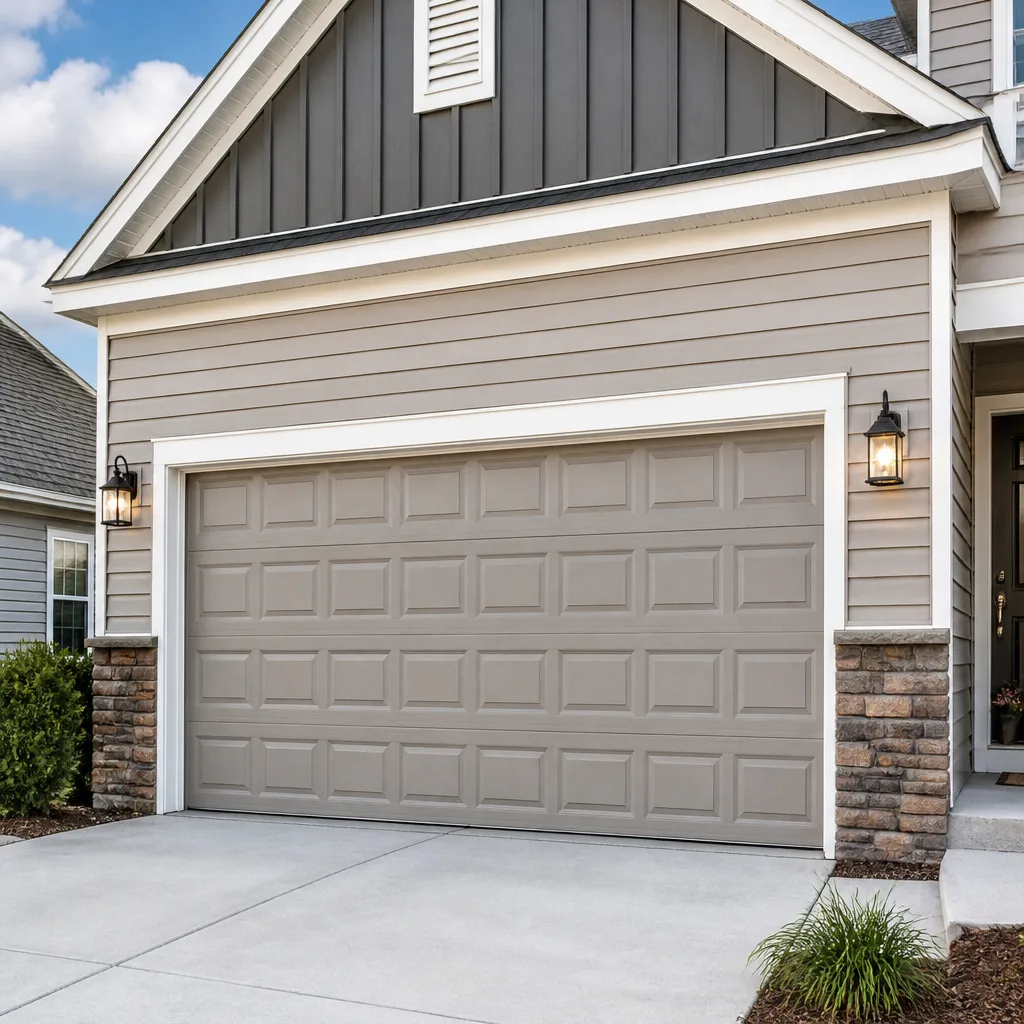 Raised-panel steel
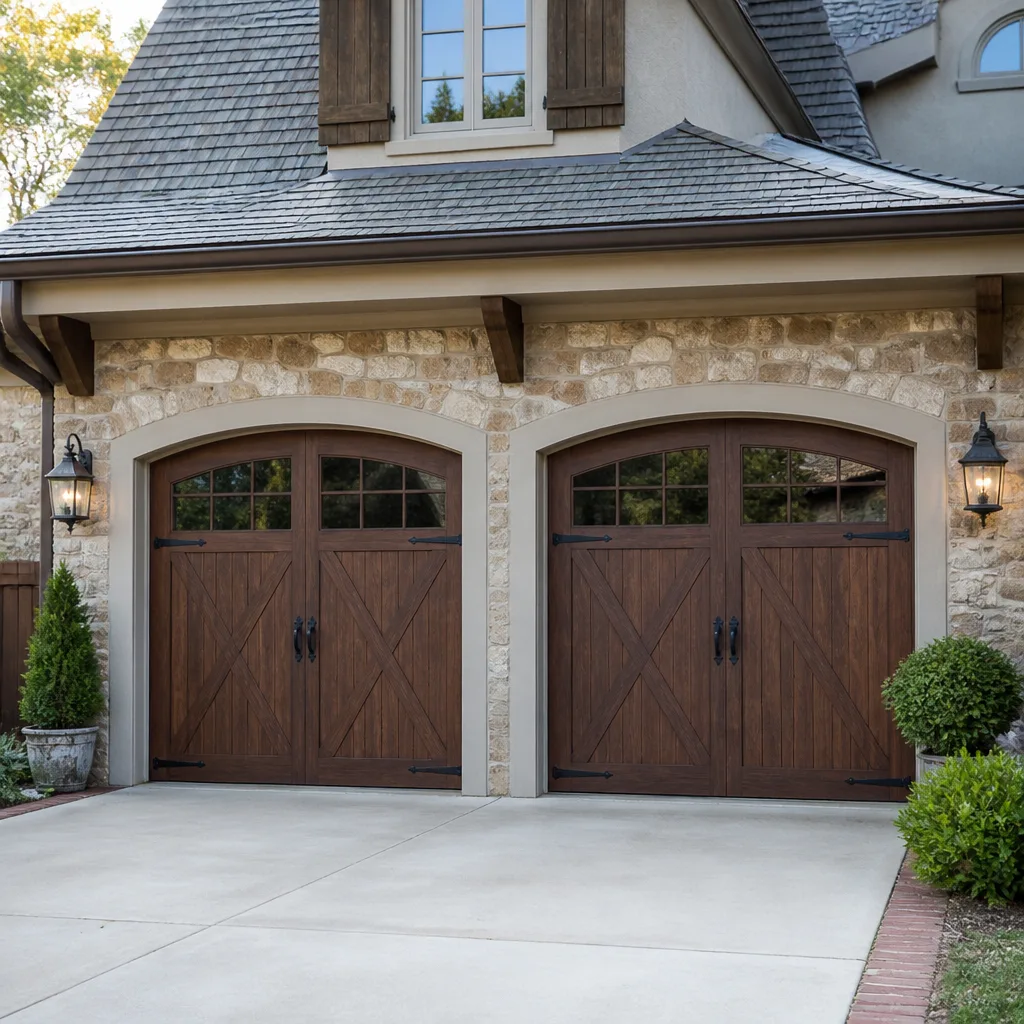 Carriage house
 Modern flush
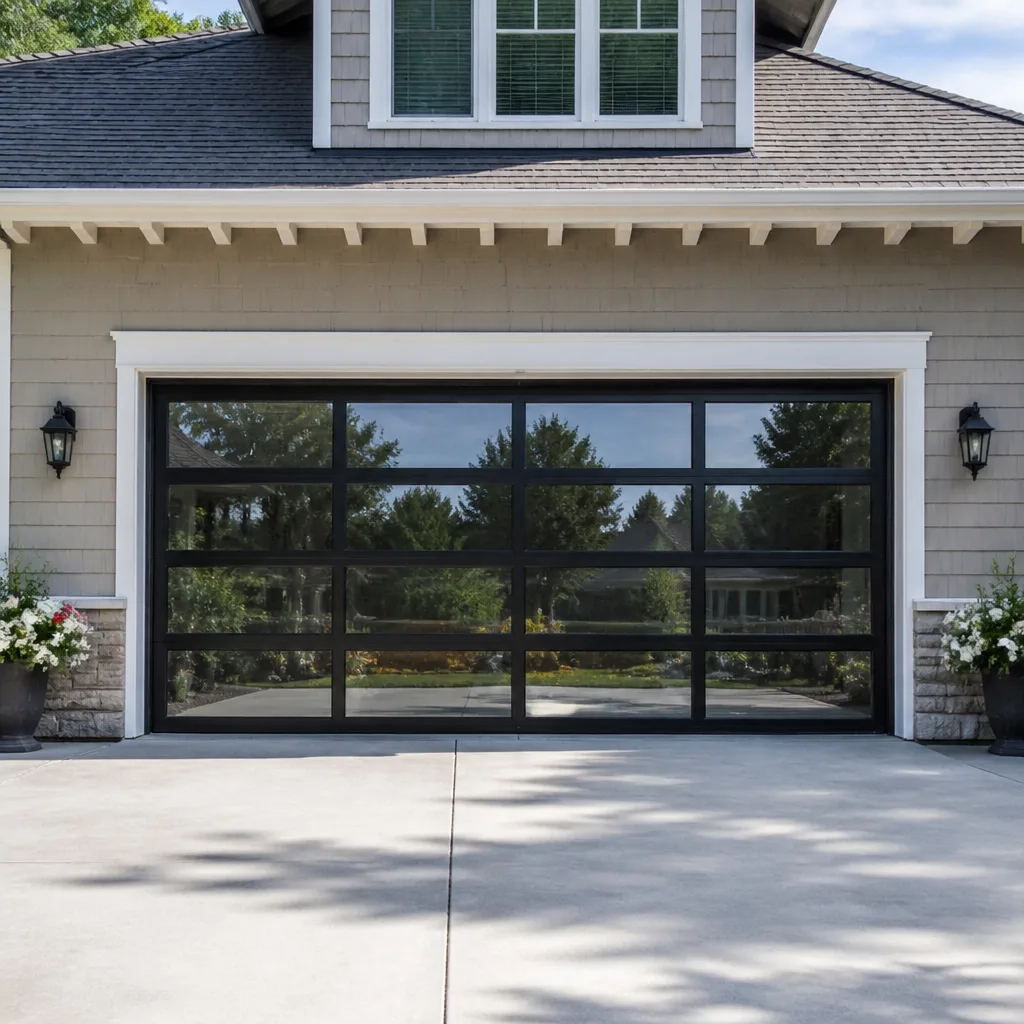 Full-view glass
 LiftMaster openers
 Chamberlain openers
Full 25-point door and opener safety check with every visit - springs, cables, rollers, tracks, and your LiftMaster or Chamberlain opener included
You get a price before we start. It does not change when the pro arrives.
Get your free estimateGarage Door Warning Signs: A Lee-Harvard Homeowner’s Reference Guide
A garage door doesn’t snap a spring without warning. It gives you weeks of signals first, and most of them are easy to rationalize away. The homeowner who ends up with a door stuck open on a February night almost always noticed something months earlier and talked themselves out of it. That’s the gap this guide is built to close. We’re not going to walk you through the dramatic failures you’ve already read about elsewhere. We’re going to show you the earlier, quieter signs that most homeowners in Lee-Harvard dismiss, tell you which ones demand action today, and explain how to describe what you’re hearing and seeing so a technician can diagnose it correctly the first time.
Quick Answer
The earliest garage door warning signs are almost never the loud ones. Look for a door that feels heavier than it used to, a slight hesitation at the top of its travel, a thin dark wear line on a torsion spring, a roller that hums instead of rolls quietly, or a door that won’t stay balanced at the halfway point. Any one of these means a component is wearing out under load. A door that still opens but fails the balance test is already a liability, even though it looks fine from the driveway.
Styles & brands we work with
- Raised-panel steel
- Carriage house
- Modern flush
- Full-view glass
- LiftMaster openers
- Chamberlain openers
Table of Contents
- Why the Earliest Warning Signs Are the Hardest to See
- Spring Warning Signs: Early Wear and Late Failure
- Cable Warning Signs You Can Spot in Under Five Minutes
- Track and Roller Warning Signs
- Opener Warning Signs: Sounds, Straining, and Remotes
- Panel and Hardware Warning Signs
- The Sounds That Point to Each Problem
- Which Signs Are Dangerous Now vs. Safe to Monitor
- The Balance Test and the Functional-vs-Safe Gap
Why the Earliest Warning Signs Are the Hardest to See
Most warning-sign guides jump straight to the obvious: a snapped spring, a door hanging crooked, an opener that only clicks. Those are end-stage failures. By the time a spring breaks, it has spent a long time talking to you first. The problem is that garage doors are built to keep working while they degrade. A spring loses tension gradually, a cable strands one wire at a time, and a roller flattens slowly. Throughout, the door still opens. That resilience is exactly why a homeowner in Lee-Harvard can walk past a warning sign every morning for weeks and never register it as a problem.
There’s also a powerful bit of rationalization at work. The door “works,” so the noise must be normal. The wobble must be the house settling. This is the trap. The signals you’re noticing are real, and they’re getting worse at a rate you can’t see, because each cycle of the door wears the components a little more. A spring in steady use in a Lee-Harvard home cycles hundreds of times a year between the school run, the grocery trip, and everything else. Every one of those cycles brings a tired component closer to the failure point.
The practical takeaway: treat any change in how your door behaves as a data point, not a personality quirk. If it sounded different last month than it does today, something changed, and that something is worth understanding. This guide is organized by component so you can match what you’re seeing or hearing to the part of the system most likely responsible, then decide whether to watch it or call.
Spring Warning Signs: Early Wear and Late Failure
Springs are the component most likely to hurt someone, and they’re also the one homeowners understand least. A torsion spring stores enormous energy. If a spring or its hardware fails while you’re working around it, the release is violent. That’s why spring warning signs deserve the most attention here, and why the fix is never a casual weekend job. We’ve covered the safe way to look at it below.
Early signs
- A door that feels noticeably heavier when you lift it by hand after pulling the release. A balanced door should be light. A tired spring makes the door heavy on the way up.
- Sluggish opening: the door starts up fine, then lags or hesitates about halfway. The opener is compensating for lost spring tension.
- A fine dark line or visible gap on the coils of the spring. Springs are wound tightly, and a small gap in the coil is often the first visible sign of strain.
- An opener that runs a little longer than it used to before the door seats fully. Look for that in combination with the lag halfway up.
Late signs
- A bang from the garage that sounds like a firecracker, followed by a door that won’t open or won’t stay up.
- A spring that is visibly separated or has a dangling piece of metal hanging from the torsion bar.
- The door travelling crooked, or the opener struggling to lift a door that was fine yesterday.
When you spot early spring wear, the smart move is to have it looked at rather than nurse it along. Spring repair is a trade with a right way and many wrong ways, and garage door repair starts with an honest read on whether the spring is at the end of its life or has years left. If you can’t tell which end of the scale you’re on, call before you reach for a ladder.
Cable Warning Signs You Can Spot in Under Five Minutes
Lift cables run from the bottom corners of the door up to the drums on the header wall, one on each side, and they carry the door’s full weight while the springs do the lifting. A cable doesn’t fail all at once. It frays one wire at a time, and those early strands tell you what’s coming.
The five-minute visual check
- Look along the sides of the door from the driveway with the door closed. On each side, follow the cable from the bottom bracket up toward the top of the track. You’re looking for loose strands, a fuzzy edge, or kinks in the wire.
- Check the bottom corners. A cable that has jumped its groove or looks slack on one side is a real warning sign, not a cosmetic issue.
- Look at the drums at the top of each side. The cable should be wound evenly. A cable piling up on one side or wrapped unevenly can indicate a problem worth a professional look.
- Do a pass on the rollers while you’re there: look for a flat spot, cracking, or a roller that no longer sits straight in its track.
- Walk the door by eye with it partway up (only if a spring has already failed and the door is fully down, or by watching it travel normally) and see whether one side lifts before the other. An uneven lift often points to a cable or track problem.
A frayed cable is not a monitoring item. It’s the one visual check in this guide where a homeowner should stop and call. Cables are under the same stored energy as springs, they fail at the bottom bracket where people stand, and a snapped cable can whip. If you spot loose strands or a kink, treat it like a spring failure and book service rather than cycling the door. Our technicians have up to 14 years of experience with these systems, and this is the sort of thing a trained eye confirms in a minute.
Track and Roller Warning Signs
Tracks and rollers take a beating quietly. The vertical and horizontal track sections are what guide the door as it travels, and the rollers are what ride inside them. When either one drifts, the door starts working against itself, and the damage compounds.
Early signs
- A door that doesn’t travel smoothly: you notice a hitch or a small stutter as it goes up or comes down.
- A new gap or change in the gap between a vertical track section and the garage frame. Tracks move when a wall mount loosens or the frame shifts.
- Look at the rollers when the door is closed: a roller with a flat spot, a cracked collar, or a roller that has climbed slightly out of its track.
- A door that rubs on one side without scraping, just a consistent light contact that wasn’t there before.
Later signs
- A track that is visibly bent or pushed in at the point where the door leaves it under load.
- Dents or rolled edges on the track, often from a misaligned track on a heavy door.
- A door that comes off its track completely. This is a safety issue, not a schedule item: leave the door where it is and call, because running it again risks further damage and injury.
A loose mount is one of the most common causes of a track drift, and it doesn’t take a hard hit to loosen one. It takes a heavy steel door cycling every day. If you see the drift early, correcting it is straightforward. If you let it go, the door grinds the track and the rollers, and a simple adjustment becomes a bigger repair. Our Garage Door Repair Lee-Harvard team sees this pattern often, and early correction is usually the cheaper outcome.
Opener Warning Signs: Sounds, Straining, and Remotes
The opener is the voice of the whole system. If the door is heavier or rougher than it should be, the opener is the part that tells on it: it hums longer, strains harder, and eventually starts failing to complete the lift. A weak opener can also be the canary for a mechanical problem elsewhere.
Early signs
- The opener sounds louder or more strained than it used to. A healthy cycle is a smooth motor whir; a strained one is a grind or a groan.
- The remote range has shortened or the wall button takes a second press before the door responds. This could be the opener, the wall station, or a weak remote battery, but a pattern of it points to the unit.
- The opener stops and reverses on the way down for no obvious reason, or travels a little then stops. This is often the opener’s travel or force setting reacting to a door that’s dragging.
- The light flickers or the unit cuts out mid-cycle. A unit that runs a little hot and stops, then works again, is telling you something.
Later signs
- The opener hums but the door doesn’t move. That usually means the motor is fine and the drivetrain or the door itself has stopped it.
- The door goes down and reverses repeatedly. It’s one of the signals that most often gets ignored, even though it points to a safety-system problem.
- Any opener failure that leaves the door hanging. This is where emergency service matters, because the door is stuck between open and closed and the house is exposed.
A noisy or hesitant opener is worth a proper diagnosis: brand logic matters here, and garage door opener repair reads differently for a LiftMaster or a Genie than it does for a Craftsman or a Chamberlain. A technician who knows the brand may find the fix in minutes instead of replacing a motor that was never the problem.
Panel and Hardware Warning Signs
Panels and hardware give you the most visible warnings of the whole system, and the most tempting to ignore. A panel doesn’t have to be crushed to be a problem. Small impacts and long-term wear show up as cracks and loose hinges long before the door stops working.
- Dings and small dents on steel and aluminum doors accumulate, especially on a door that faces a driveway where kids play or cars pull in close. A dent that creases a panel edge is structurally more significant than a shallow one.
- Cracks in wood or composite panels let in water, and in a climate with real freeze-thaw swings and hot summers, water inside a panel breaks it down faster than you’d expect.
- Loose hinges and shaking brackets on the hinge points and the bottom brackets are a wear item. Loose hardware lets the door flex as it moves.
- Rust along the bottom edge of a steel door. Look along the sill where the door meets the ground, because moisture sits there and starts the process.
- Panel bowing or a door that looks slightly curved when viewed from the driveway with the door closed.
Aesthetic damage is one thing. A panel that has lost stiffness, or hardware that has worked loose, is a safety question because it changes how the door behaves under load. If you’ve got a Clopay or an Amarr door with a creased panel and a hinge that’s started to work loose, that’s a call worth making before it gets worse. If the door is old enough that multiple panels and the hardware are all tired, replacement may make better sense than a parts repair, and that’s where garage door installation starts to make financial sense.
The Sounds That Point to Each Problem
Homeowners are often better at describing sounds than they realize, and a good technician can diagnose from a description before ever leaving for the job. The skill is matching the sound to the component. Use this as a rough map, and describe what you hear as specifically as you can when you call.
Common sound-to-component map
- A single loud bang, then a door that won’t lift: a spring has failed. Do not run the door again.
- A sharp twang or pop followed by a door that seems suddenly much heavier: spring or winding hardware. Stop and call.
- A grinding or grating noise while the door travels, especially near one side or at the bottom: track, rollers, or a door scraping where it shouldn’t.
- A rhythmic squeaking or metal-on-metal as it goes up and down: rollers, hinges, or a dry pivot point.
- A hum or groan with no door movement: the opener is running but the drivetrain or the door has stopped it.
- A rattling or clanking at the top when the door comes down: loose hardware, brackets, or the top panel section vibrating.
- A series of rapid clicks near the opener head with no reliable movement: the opener’s logic board or travel sensor is reacting to something.
Record a short video of the cycle on your phone if you can. A 10-second clip of a door in motion is worth a long description, and it helps our team confirm what you’re dealing with. In our experience, a homeowner who says “it grinds on the left side about a foot from the bottom, and it started about two weeks ago” gives a technician far more to work with than “it’s making a noise.”
Which Signs Are Dangerous Now vs. Safe to Monitor
This is where most guidance stops short, and it’s the question homeowners actually need answered: what do I do about it today? Not every warning sign is an emergency. Some can be monitored for a few weeks while you schedule a proper repair. Others are stop-right-now.
Stop and call a professional now
- Any spring failure, or a spring that looks separated or is hanging under the torsion bar. Springs are the most dangerous component on a garage door.
- Any cable that is frayed, kinked, or slack on one side. Cables carry the full weight of the door.
- A door that has come off its track, or a track that is visibly bent.
- A door that moves unevenly or has one side riding hard on the frame.
- The opener reversing on its own with no obstruction, especially on the way down.
- A door that is hanging open and won’t close. This is a security question as much as a mechanical one, and it’s where emergency service is worth every call.
Monitor and schedule
- A slightly noisy opener that otherwise runs reliably. Note the change and book service in the next few weeks.
- A door that feels a little stiff or slow at the start of a lift. Worth watching for a week or two, but get on the schedule.
- Cosmetic panel dents without a crease. Watch for a crease developing or a hinge working loose.
- A single rained-in squeak that goes away after a few cycles. Note it: if it returns, that’s a pattern.
The dividing line is simple: any sign that points to stored energy, weight, or the door hanging open is an immediate call. A sign that points to wear in a part that isn’t yet in danger is a short schedule. Our technicians have up to 14 years of experience, and one thing they’ll tell you is that the difference between a cheap fix and an expensive one is often counted in weeks, not days.
The Balance Test and the Functional-vs-Safe Gap
A door can open and close every day for years and still be unsafe. That gap between “works fine” and “is safe” is the single most important idea in this guide. A door that passes every visual test but fails the balance test is already a liability, because it means the spring, the cables, and the opener are all doing more work than the door’s counterbalance is willing to take on.
The balance test
- Close the door and pull the emergency release handle on the opener rail to disconnect the door from the opener carriage.
- Lift the door by the inside handle or the bottom section to about waist height, then let go.
- Watch what it does. A properly balanced door stays roughly where you left it, with little or no help. A door that drops on its own within a foot or two has lost its spring tension; a door that flies back up is over-tensioned or misadjusted.
- Do not force it. If the door feels heavy, strange, or won’t hold, let it down, reconnect the release, and leave it. Get the door checked before you use it again.
- Reconnect the release by pulling the handle toward the door, then operating the opener and confirming the carriage re-engages. If you’re not sure, leave it disconnected and call.
A door that drops on the balance test is a door running on its opener and cables instead of its springs. That means it’s a slowed-down version of a failure that’s already in progress. If you fail the test, that’s your call to schedule service. If you pass but the test feels marginal, that’s still a good reason to have it checked, because the components are already working harder than they should.
- Do not adjust springs, cables, or the winding hardware yourself. This is the one part of this guide you should never try to fix on your own. Garage door springs and cables store enough energy to cause serious injury. Trained, equipped professionals do this work for good reason.
- Do not cut a spring, clamp a cable, or use a wrench on the torsion bar. There is no safe DIY version of this job.
Common Mistakes to Avoid
- Waiting for the door to break before booking service. Early warning signs are cheaper to fix than late failures. A worn roller is a small job; a spring that fails mid-lift is not.
- Assuming a “working” door is safe. A door can fail the balance test every day without any visible symptom to a casual eye. Run the test at least once a season.
- Calling a multi-trade generalist because they “also do doors.” Springs, cables, and brand-specific opener logic are a specialist’s work, and Lee-Harvard homes deserve a technician who does this every day.
- Lubricating a failing part to quiet it down. Grease on a worn hinge is fine. Grease on a spring that’s telling you it’s tired just hides the signal.
- Ignoring a noise because it comes and goes. An intermittent sound is still a pattern; note when it happens and describe it on the phone.
- Running a door with a frayed cable or a door that came off its track. That’s the one mistake that turns a repair into an injury or a bigger job.
- Doing the balance test with the opener still connected. It doesn’t tell you anything until the door is disconnected from the carriage, and you can’t judge the spring’s health through the motor.
- Letting an old Clopay or Wayne Dalton door limp along with multiple issues. When a door has a tired spring, worn rollers, and a creased panel, a repair bill can approach the cost of a new door. Weigh the two honestly.
See the difference
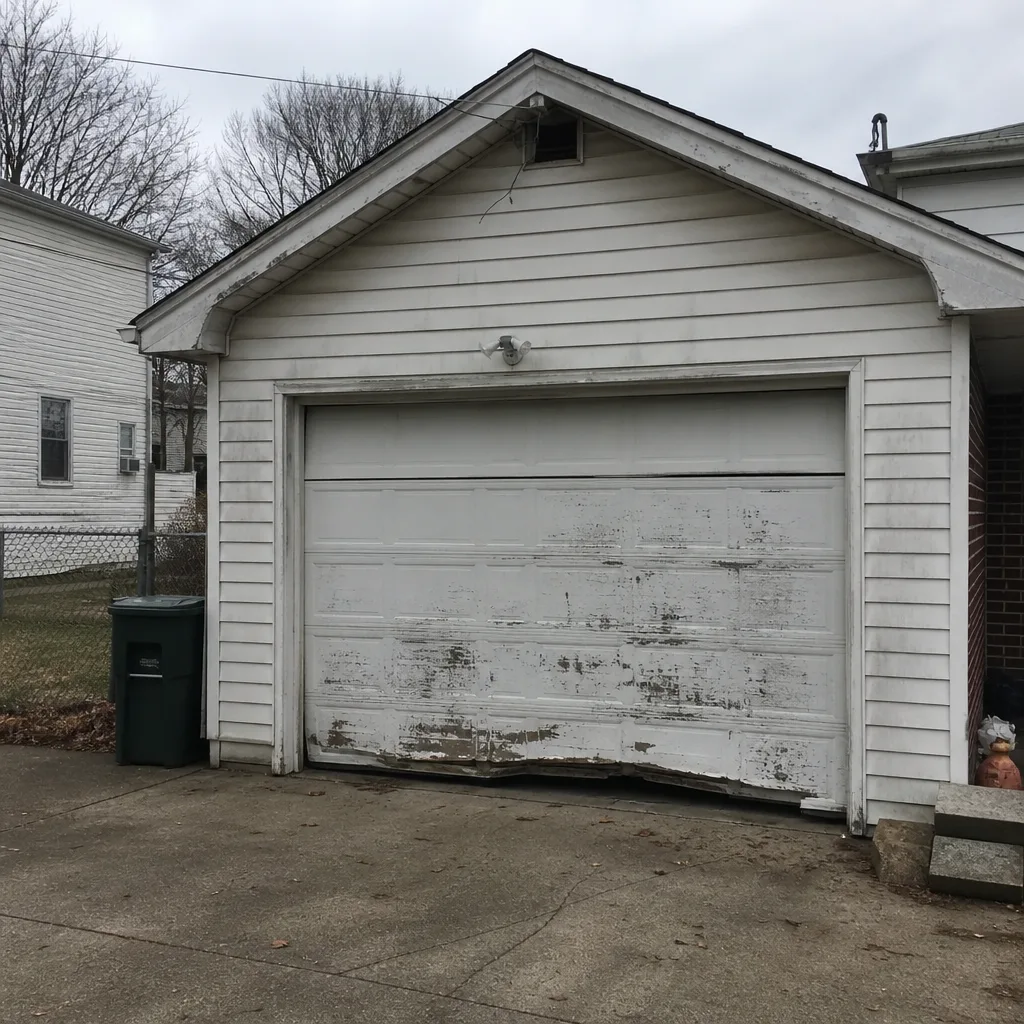 Before
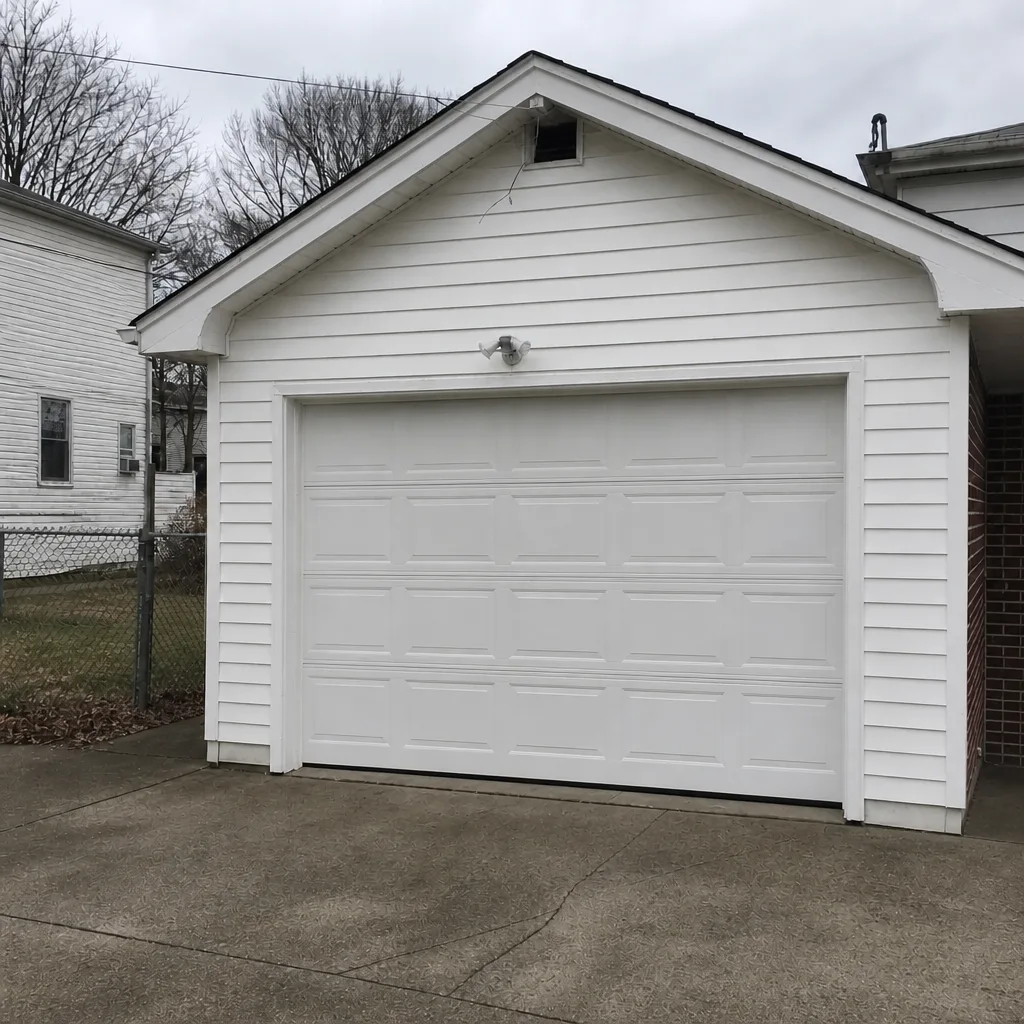 After
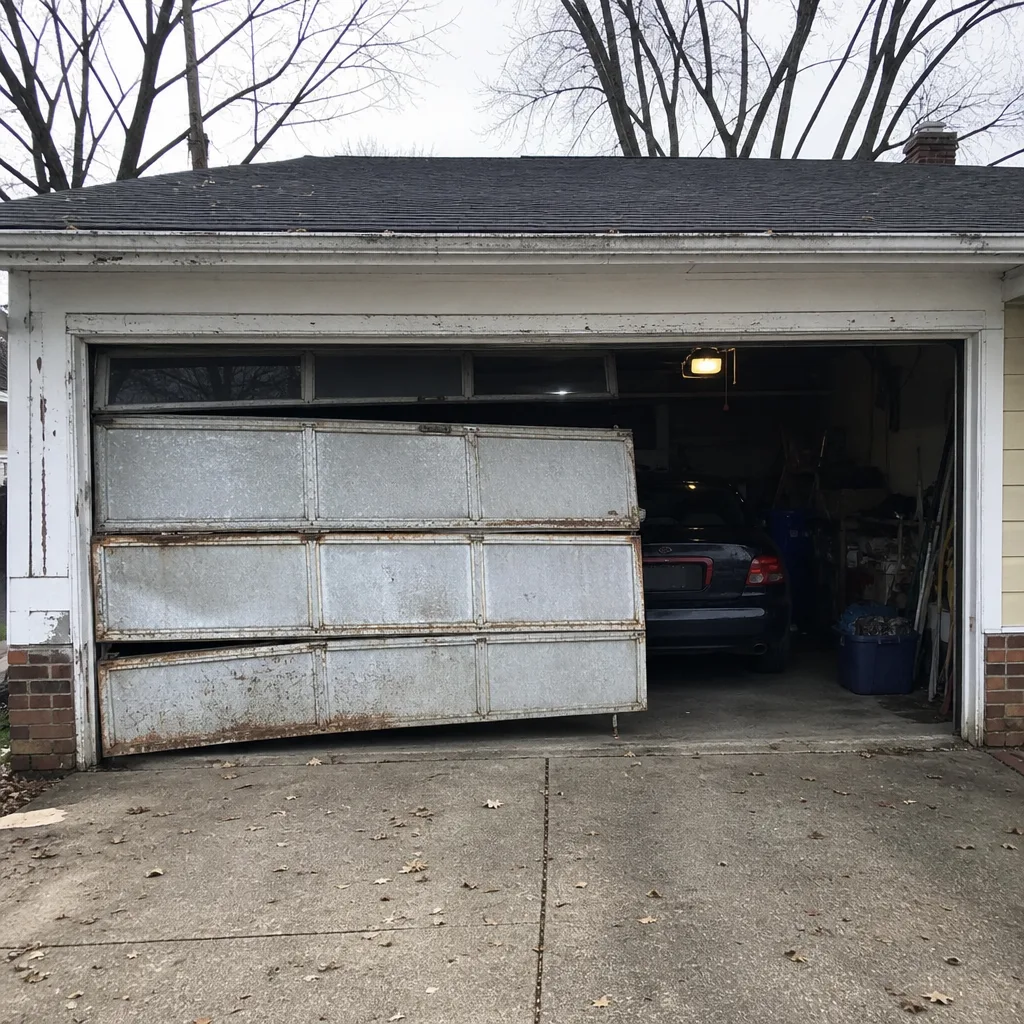 Before
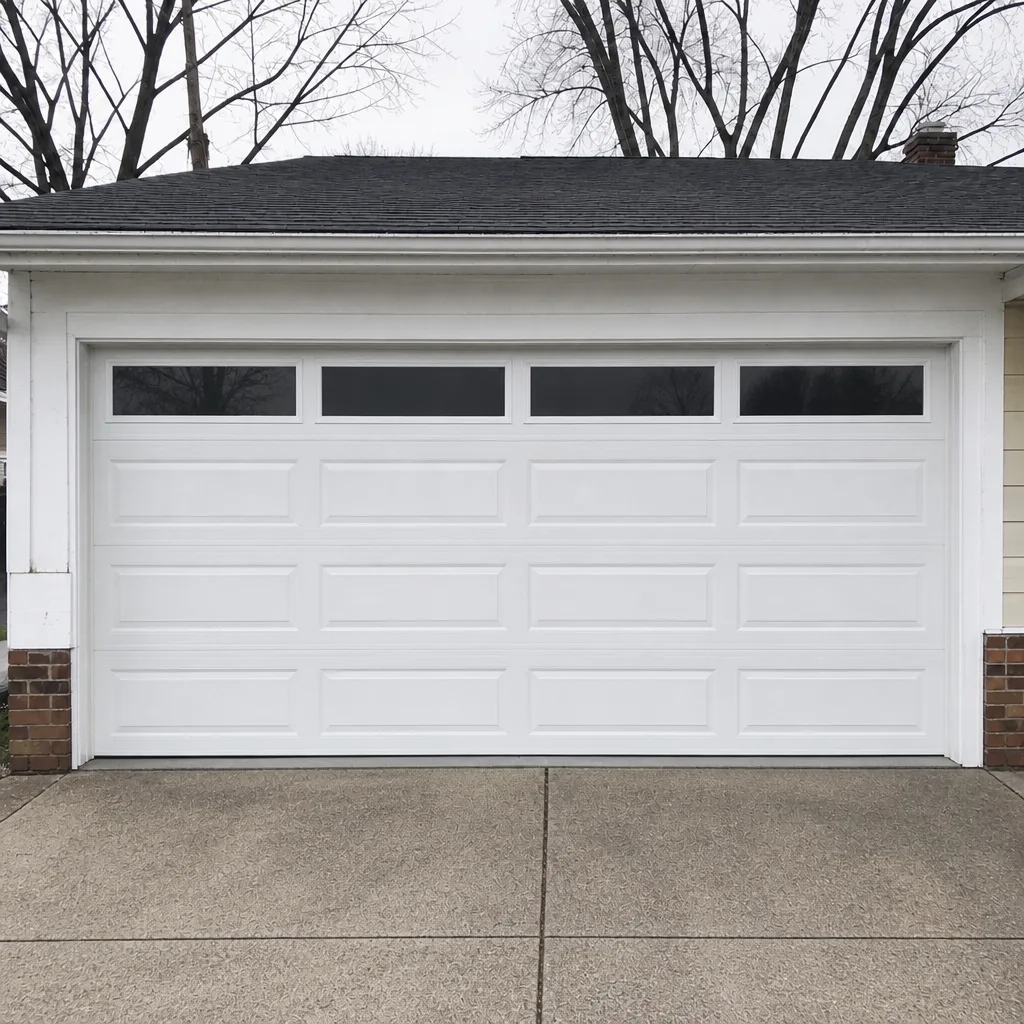 After
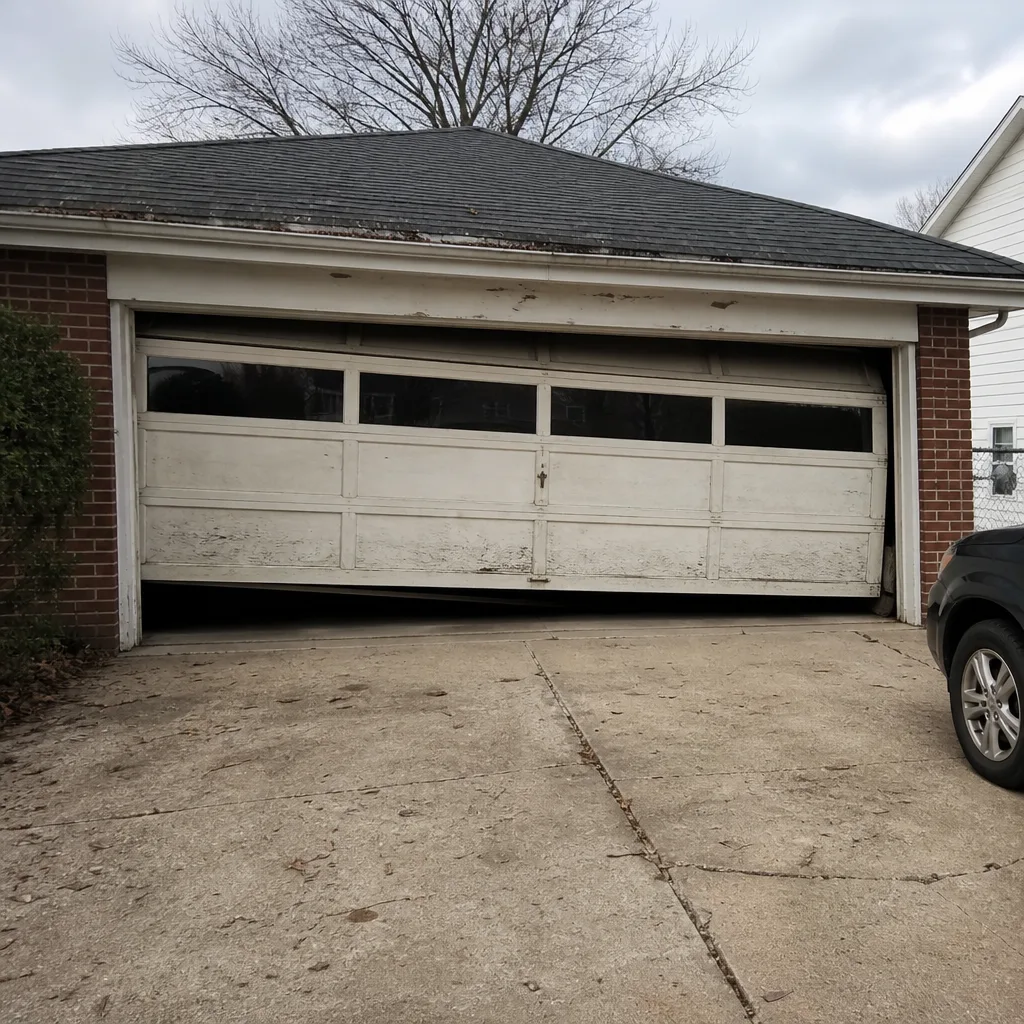 Before
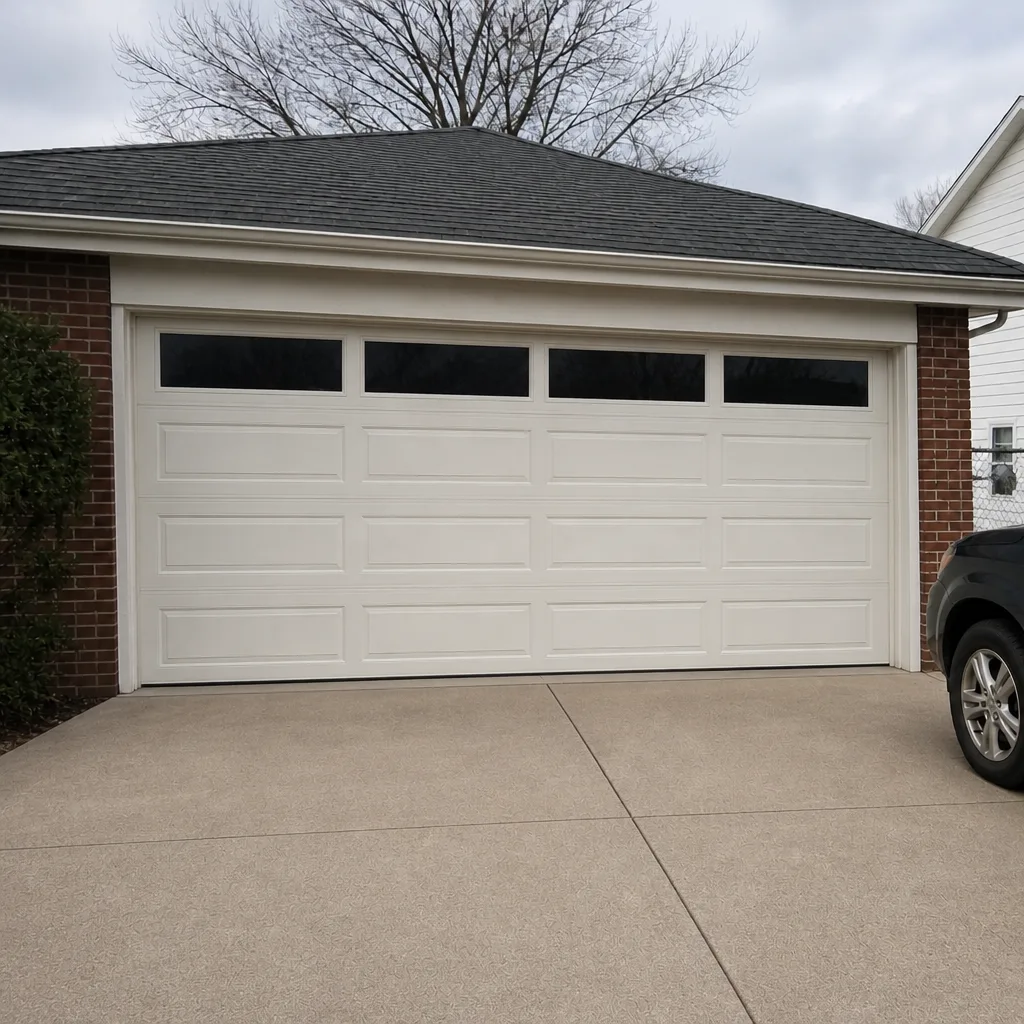 After
When to Call a Professional
Call when a spring fails, when a cable looks frayed or slack, when the door comes off its track, when the door hangs open and won’t close, or when your opener reverses on its own with no obstruction. Those are the signs that put people and property at risk today. Call sooner than you think you need to when the balance test fails, when the opener is straining, when a door is starting to run unevenly, or when you’ve noticed a change and can’t identify it.
Garage Door Repair Lee-Harvard offers free estimates in Lee-Harvard. Call (844) 956-5742. We answer 24/7, and we offer fast dispatch from 7am to 7pm, Sunday through Friday. Garage doors are all we do, so the diagnosis you get is from a specialist, and the written estimate gives you the price before we start. Our Garage Door Repair Lee-Harvard team has seen every one of these warning signs before, and we’d rather look at a small one than fix a big one later.
Frequently Asked Questions
The earliest reliable sign of a failing spring is a door that suddenly feels heavier when you lift it by hand after releasing it from the opener, often paired with a sluggish lift halfway up. A fine dark gap or line on the spring coil is a good early visual check. If you spot either one, schedule service; if you hear a loud bang and the door won’t lift, that’s a failure, and you should stop using the door and call.
No. A frayed or kinked lift cable is a stop-right-now sign because the cable carries the full weight of the door and can fail suddenly. Leave the door where it is and call for service. In Lee-Harvard, our team looks at cables on every repair call, and a cable that’s already frayed is never something to monitor for a few weeks.
It depends on the part: a routine adjustment or roller swap is typically at the low end, a spring repair is more, and a door off its track or a panel repair can go higher. The written estimate sets the price before any work starts, so you’ll know what you’re paying. Call (844) 956-5742 for a free estimate, and we’ll tell you whether the fix is worth doing or the door is at the end of its useful life.
The written estimate is the price. We set the cost per job by a written estimate before any work begins, and that’s the number you approve. If we open the door and find a second issue that changes the scope, we’ll stop and show you before doing anything further. Call (844) 956-5742 and estimates are free.
Same-day service is often possible, especially for a door stuck open or a door that won’t close. We answer 24/7, and fast dispatch runs from 7am to 7pm, Sunday through Friday. If the door is hanging open at an unsafe angle or won’t close at all, call (844) 956-5742 and we’ll get it on the schedule as fast as we can.
Yes. The local pro who comes to your Lee-Harvard home is licensed and insured as Ohio requires, and the technicians have up to 14 years of experience with garage doors. We also know the brands, including LiftMaster, Chamberlain, Genie, Clopay, Amarr, Wayne Dalton, Craftsman, and Raynor, so the diagnosis follows the system rather than guesswork. Call (844) 956-5742 to book a free estimate.
A noisy door is a warning sign worth acting on, even when it still works. Grinding, squeaking, or a strained opener usually points to a worn roller, a loose hinge, a track that’s drifting, or a spring that’s tiring. A door that runs reliably but noisily is a door worth a free estimate; the fix is usually smaller now than it will be if it fails mid-lift.
Age, panel damage, and how many components are failing at once are what usually decide it. A single worn part is a repair. A door with multiple failures across the springs, cables, rollers, and a creased panel is worth comparing against the cost of a new door. If you’ve got an older door in Lee-Harvard and you’re not sure which way to go, ask for the free estimate.
The Bottom Line
A garage door almost always warns you before it fails. The loud, obvious signs are late signs: a snapped spring, a door off its track, an opener that only hums. The earlier signs are the quiet ones you’ll be tempted to rationalize. A door that feels heavier. A lift that lags halfway up. A fine gap on a spring coil. A single frayed wire on a cable. A roller that’s gone flat. A noise that wasn’t there last month. The balance test is the fastest way to catch the difference between a door that works and a door that’s safe. Run it, know the stop-right-now list, and call when something has changed. Our team at Garage Door Repair Lee-Harvard has up to 14 years of experience on these systems, and our full-lifecycle service covers repair, opener work, spring repair, and installation so you don’t make a second call. Call (844) 956-5742 for a free estimate. We answer 24/7, with fast dispatch from 7am to 7pm, Sunday through Friday. The written estimate is the price, agreed before we start.
Written by the team at Garage Door Repair Lee-Harvard.